
Hip Pain & Mobility Program in Vancouver
Rebuild hip strength and mobility with low-impact training designed for adults over 40 dealing with hip discomfort, stiffness, or recovering from injury through our specialized Injury Rehab Vancouver programs.
Real Results from Vancouver Adults 40+
Personal Training Reviews from Google | 97 Reviews 4.9 Avg Rating
Why Hip Pain Becomes More Common After 40
Natural Cartilage Breakdown
Hip osteoarthritis affects nearly 1 in 4 adults over 45, developing when protective cartilage gradually wears down. You experience grinding sensations, morning stiffness, and deep aching pain that worsens with activity. The ball and socket joint begins scraping bone on bone, causing inflammation that limits your mobility and makes simple tasks like climbing stairs or getting out of a car uncomfortable.
Weak Hip Muscles Create Instability
Adults lose 3-5% of muscle mass per decade after 30, accelerating after 40. When your glutes, hip flexors, and stabilizing muscles weaken, excess stress shifts onto the hip joint itself. This creates a cycle where pain causes inactivity, inactivity causes further weakness, and weakness creates more pain. Strengthening these supporting muscles is essential for reducing hip joint stress and preventing further degeneration. Weak or restricted hips also place excess strain on the lumbar spine, which is why many clients dealing with hip pain also experience chronic lower back discomfort addressed in our low back pain strength program.
Sedentary Lifestyle Accelerates Stiffness
Desk work and prolonged sitting shortens hip flexor muscles while weakening glutes, creating muscle imbalances that pull the pelvis out of alignment. Your hip joints become stiff from lack of movement, reducing synovial fluid production that naturally lubricates the joint. Breaking up sitting time with regular movement and targeted hip strengthening exercises significantly improves hip mobility and reduces pain.
Why Traditional Gyms Fail Hip Pain Recovery
Most Vancouver gyms and bootcamp classes push high-impact movements that aggravate hip problems rather than healing them. Heavy barbell squats compress already inflamed joints. Jumping exercises create jarring forces your hips cannot handle. Group fitness instructors lack the expertise to modify movements for your specific hip limitations, leaving you working around pain instead of addressing the root cause.
Physiotherapy clinics excel at initial pain management through manual therapy and stretching, but most stop short of the progressive strength training your hips need for long-term stability. Once your 6-8 physio sessions end, you are left without guidance on how to safely rebuild strength and prevent future hip problems. You need someone who bridges that gap between pain management and full functional strength.
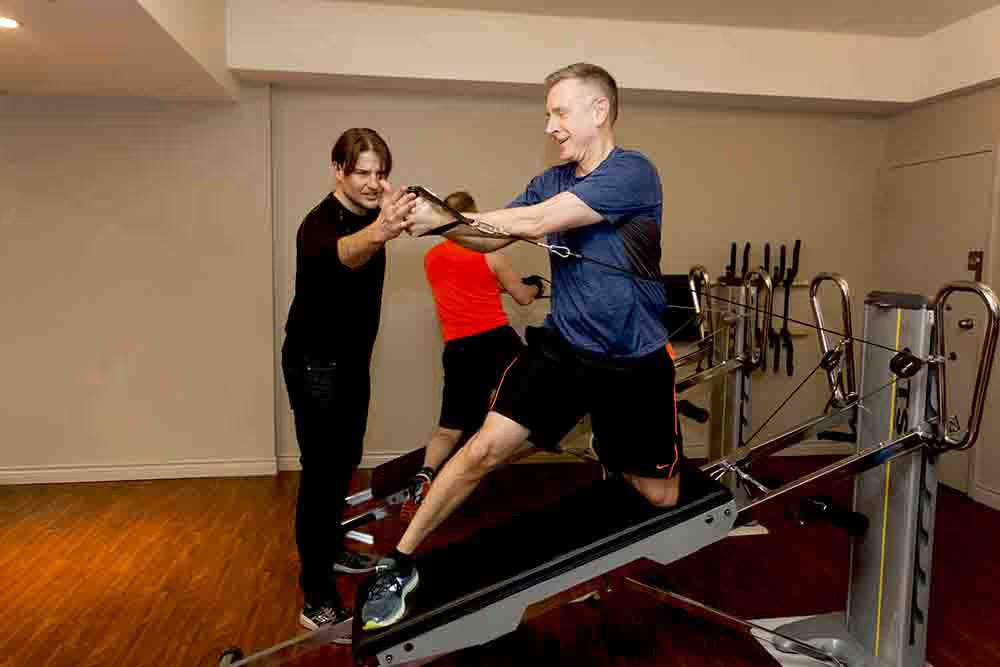
TSquared specializes in exactly this transition phase. The Gravity Training System provides controlled, progressive resistance without joint compression. Troy modifies every exercise to work within your current hip mobility while systematically strengthening the muscles that stabilize your hip joint. You build strength that actually reduces pain rather than triggering it, all under the watchful eye of a trainer with 20+ years experience working with adults over 40 recovering from injury.

Hip Pain Symptoms This Program Addresses
This program helps Vancouver adults over 40 experiencing these specific hip-related challenges. If you identify with multiple symptoms, progressive strength training becomes essential for preventing long-term mobility loss.
- Deep Groin Pain During Movement: Sharp or aching pain in the groin area when walking, climbing stairs, or transitioning from sitting to standing. This classic sign of hip joint problems often indicates cartilage breakdown or hip impingement requiring targeted strengthening of surrounding muscles to reduce joint stress.
- Morning Hip Stiffness: Difficulty moving your hip joint after sleeping or sitting for extended periods. The joint feels locked and requires 10-15 minutes of movement before loosening. This stiffness results from inflammation and reduced synovial fluid production, improving significantly with regular movement and strengthening exercises.
- Lateral Hip Pain: Pain or tenderness on the outside of your hip, especially when lying on that side or walking. Greater trochanteric bursitis and gluteus medius tendinopathy cause this sharp, localized discomfort that responds well to progressive hip abductor strengthening and mobility work.
- Limited Range of Motion: Difficulty putting on socks and shoes, getting in and out of cars, or performing activities requiring hip flexion and rotation. This functional limitation significantly impacts daily life quality and indicates the need for both mobility and strength interventions before permanent restriction develops.
- Post-Activity Soreness: Your hip feels fine during activity but aches for hours or days afterward. This delayed pain response suggests weak stabilizing muscles forcing your hip joint to work harder than designed, creating inflammation that builds up over time.
- Radiating Pain Down the Thigh: Discomfort that starts in your hip but travels down the front or side of your thigh. Piriformis syndrome, hip flexor strain, or referred pain from lumbar spine issues can create this pattern, requiring comprehensive assessment to identify the primary pain generator.
- Clicking or Grinding Sensations: Audible or felt popping, clicking, or grinding when moving your hip joint. While not always painful, these sensations indicate irregular joint surfaces or labral tears that benefit from strengthening the surrounding musculature to improve joint mechanics.
- Balance Difficulties: Feeling unstable when standing on one leg or noticing your hip drops on the opposite side. Weakness in the gluteus medius creates this Trendelenburg sign, significantly increasing fall risk and requiring specific single-leg stability training.
How Gravity Training Rebuilds Hip Strength Without Aggravating Pain
The Gravity Training System at TSquared offers a unique solution to the fundamental problem hip pain sufferers face. Traditional free weights compress your hip joint under load, forcing bones together and increasing inflammatory pressure. Resistance bands provide inconsistent tension that cannot deliver the progressive overload your muscles need to actually strengthen. Machines at commercial gyms lock you into fixed movement patterns that ignore your body's natural compensation strategies around pain.
Gravity Training works differently. The adjustable incline system uses your own body weight to create smooth, progressive resistance across multiple planes of movement. When performing hip strengthening exercises, resistance comes from the angle of the platform rather than direct compression on the joint. This means your hip muscles work hard to control movement while the joint experiences minimal stress.
Troy can instantly adjust the incline angle mid-exercise to match your current strength level and pain threshold. If an exercise feels uncomfortable at 30 degrees, he reduces to 20 degrees where you can perform the movement pain-free. As your hip strength improves over subsequent sessions, the incline gradually increases, providing the progressive challenge your muscles need to grow stronger without ever pushing into pain-producing ranges.
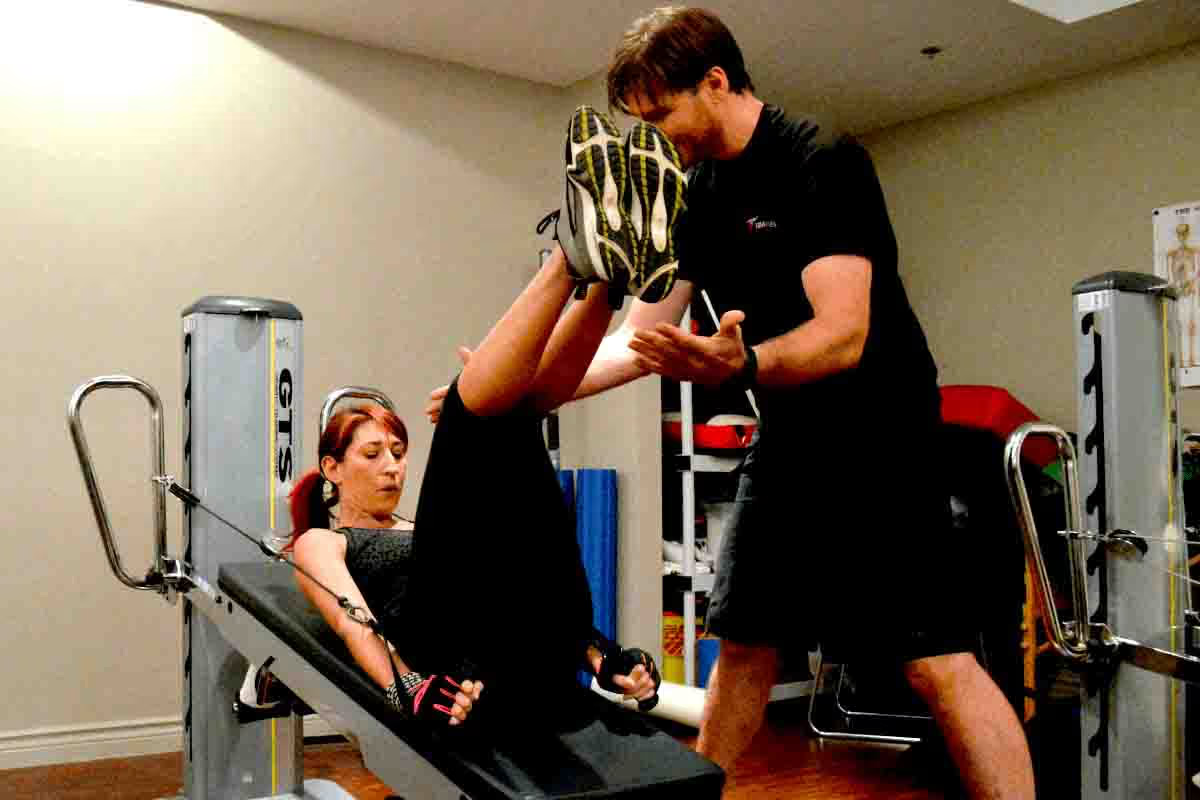
This controlled environment allows you to safely perform exercises that would be impossible with traditional equipment. Hip abduction and adduction movements strengthen your gluteus medius and adductors without lateral loading. Hip flexion and extension patterns rebuild strength through full ranges of motion while maintaining joint space. Core stabilization exercises integrate with hip strengthening to address the kinetic chain dysfunction that often underlies chronic hip pain.
The system excels at addressing muscle imbalances common in hip pain patients. Because the hips directly control knee alignment, unresolved hip weakness often contributes to persistent knee pain — a pattern we also address in our knee pain strength program. Your dominant side typically compensates for weakness in the affected hip, creating asymmetries that perpetuate problems. The Gravity Trainer allows Troy to work each hip independently, ensuring balanced strength development that restores proper movement patterns and reduces compensatory stress throughout your lower body.
Your Hip Pain & Mobility Program Includes
Comprehensive Hip Assessment
Troy evaluates your hip range of motion, identifies muscle imbalances, tests single-leg stability, and assesses your movement patterns to understand where limitations exist. This 30-minute assessment includes specific tests for common hip conditions like FAI, bursitis, and labral issues. You receive a clear explanation of your hip mechanics and what specific weaknesses need addressing.
Progressive Strength Protocols
Your program targets all major hip muscle groups through carefully sequenced exercises that build on each other. Sessions include gluteus maximus and medius strengthening, hip flexor and adductor work, core integration for pelvic stability, and functional movement patterns. Resistance increases gradually as your strength improves, ensuring continuous progress without setbacks.
Mobility & Flexibility Work
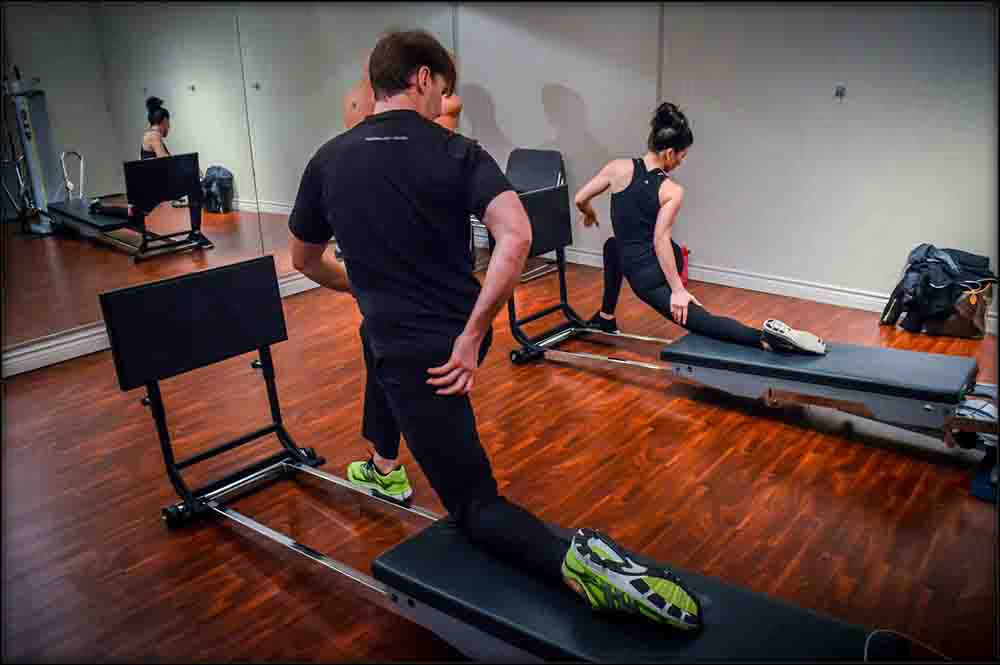
Every session includes targeted stretching for tight hip flexors, piriformis, IT band, and hamstrings that contribute to hip dysfunction. Dynamic mobility drills improve your hip joint's range of motion while static stretches address chronic tightness. This combination ensures you build strength through full, pain-free ranges rather than reinforcing limited movement patterns.
Ongoing Form Correction
Troy watches every repetition, correcting technique immediately when compensation patterns appear. Small adjustments in foot position, pelvic alignment, or torso angle dramatically impact which muscles work and how much stress reaches your hip joint. This constant feedback prevents you from reinforcing the dysfunctional movement patterns that caused your hip pain in the first place.
This Program Works Best For
Vancouver adults over 40 who completed physiotherapy but still experience hip stiffness or weakness. Your pain management phase succeeded, inflammation reduced, but you never rebuilt the strength needed for confident, pain-free movement. You need progressive training that continues where physio ended.
Active individuals whose hip pain limits activities you love. Running became uncomfortable. Hiking causes days of hip soreness. Playing with grandchildren leaves you stiff and aching. You refuse to accept these limitations as permanent parts of aging and want expert guidance on safely rebuilding hip strength and mobility.
People managing early-stage hip osteoarthritis who want to avoid or delay surgery. Your doctor mentioned joint degeneration on X-rays but recommended trying conservative treatment first. Strengthening hip muscles reduces joint stress and often significantly improves pain and function, potentially postponing or eliminating the need for joint replacement.
Post-surgical patients cleared for strength training after hip arthroscopy, labral repair, or FAI correction. Your surgeon released you from formal physical therapy, but you feel uncertain about how to safely progress your training. You need structured programming that respects surgical healing timelines while building real strength.
Your Hip Recovery Journey
Initial Assessment & Goal Setting (Week 1)
Your complimentary first session at TSquared's downtown Vancouver studio includes comprehensive hip evaluation. Troy tests your hip range of motion in all planes, identifies specific muscle weaknesses, assesses your single-leg balance, and discusses your hip pain history. You leave with a clear understanding of your hip mechanics and a customized 12-week training plan targeting your specific limitations.
Foundation Phase (Weeks 2-4)
Training focuses on restoring basic hip mobility and activating weak stabilizing muscles. Sessions include gentle range of motion exercises, glute activation work, hip flexor strengthening at low resistance, and core stability integration. Most clients notice reduced morning stiffness and improved ease of movement within 2-3 weeks as muscles begin responding to consistent training stimulus.
Strength Building Phase (Weeks 5-8)
Progressive resistance increases challenge your hip muscles to grow stronger. Exercises advance to single-leg work, multi-planar movement patterns, and functional activities that mimic daily tasks. Troy systematically addresses muscle imbalances while ensuring bilateral strength development. Clients typically report significant improvements in walking distance, stair climbing ability, and reduced pain with activities during this phase.
Integration & Function (Weeks 9-12)
Training incorporates complex movement patterns and sport-specific activities relevant to your goals. You practice movements that previously caused discomfort, now performing them confidently with proper hip mechanics. The focus shifts to maintaining strength gains and teaching you strategies for continuing progress independently if desired. Most clients achieve 60-80% improvement in hip pain and function by program completion.
Maintenance & Continued Progress (Week 13+)
After completing the initial 12-week program, many clients transition to once-weekly maintenance sessions or small group training to preserve hip strength and mobility. Others continue 1-on-1 training to achieve additional fitness goals. Troy provides guidance on exercise modifications you can perform at home or in standard gyms to maintain hip health long-term.
Common Questions About Hip Pain Training
How long does hip pain take to improve with strength training?
Most Vancouver clients experience noticeable improvements within 2-4 weeks of consistent training twice weekly. Initial gains come from improved muscle activation and movement patterns rather than actual strength increases. Significant strength development typically requires 8-12 weeks of progressive training. However, chronic hip pain with substantial muscle weakness may need 16-20 weeks for optimal results.
Can I train if my hip still hurts?
Yes, as long as your healthcare provider cleared you for exercise. The Gravity Training System allows Troy to work within pain-free ranges while gradually expanding your tolerance. You should experience muscle fatigue during sessions but never sharp joint pain. Some post-workout soreness is normal as muscles adapt to training, but this differs from the deep, grinding pain indicating joint aggravation.
What makes this different from physiotherapy?
Physiotherapy excels at initial pain management through manual therapy, stretching, and basic exercises. TSquared provides the progressive strength training phase that follows physio. While physiotherapists typically see patients for 6-8 sessions focused on reducing acute symptoms, our program systematically builds strength over 12+ weeks to prevent recurrence and restore full function. Many clients work with both simultaneously or begin training after physiotherapy concludes.
How often should I train for hip pain recovery?
Two sessions per week provides optimal stimulus for strength development while allowing adequate recovery between workouts. Training once weekly maintains strength but shows slower improvement. Three weekly sessions accelerates progress for clients with specific deadlines like preparing for hip surgery or returning to sport. Troy adjusts frequency based on your recovery capacity, injury severity, and personal schedule.
Will Gravity Training strengthen my hips better than regular gym equipment?
The Gravity Training System provides superior hip strengthening for people managing pain because it delivers progressive resistance without joint compression. Traditional weights load your hip joint vertically, increasing pressure on already inflamed structures. The adjustable incline system allows infinite resistance variations within pain-free ranges, something impossible with standard gym equipment offering fixed weight increments. This precision enables continuous progress without setbacks.
Do you work with people who have hip arthritis?
Yes. Hip osteoarthritis responds very well to progressive strength training when performed correctly. Strengthening the muscles surrounding your hip joint reduces stress on deteriorating cartilage, often significantly decreasing pain and improving function. Research shows strength training can postpone or eliminate the need for joint replacement in many early-stage osteoarthritis cases. Troy has extensive experience modifying exercises for arthritic joints.
What hip conditions do you work with?
TSquared helps adults managing hip osteoarthritis, greater trochanteric bursitis, hip flexor strains, gluteus medius tendinopathy, piriformis syndrome, femoroacetabular impingement (FAI), post-surgical rehabilitation, and general hip weakness from sedentary lifestyle or aging. We do not replace medical treatment but provide the strength training component essential for long-term hip health.
Where is TSquared located in Vancouver?
TSquared operates from a private studio at 128 W Pender St #102 in downtown Vancouver, inside The Sun Tower. The studio is easily accessible from Yaletown, Gastown, Chinatown, Mount Pleasant, and False Creek neighborhoods, with nearby parking available.
Why Downtown Vancouver Residents Choose TSquared for Hip Recovery
20+ Years of Injury Recovery Expertise
Troy Tyrell has worked with hundreds of adults over 40 recovering from hip injuries, post-surgical rehabilitation, and chronic pain. His certifications in corrective exercise and functional movement assessment provide the technical knowledge required for safe, effective hip rehabilitation. Troy understands the difference between normal post-workout soreness and pain signals indicating potential setbacks, adjusting your program to ensure steady progress without injury.
Private Studio Environment Without Gym Intimidation
TSquared's private studio eliminates the crowded, intimidating atmosphere of commercial Vancouver gyms. You train in a dedicated space with just Troy and your small group (maximum 5 people) or one-on-one. No waiting for equipment, no audience watching your rehabilitation exercises, no pressure to keep pace with younger, fitter gym members. Sessions focus entirely on your specific hip recovery needs without distraction.
Proven Results With Adults Over 40
TSquared maintains 97 Google reviews at 4.9 stars, with multiple testimonials specifically mentioning hip pain improvement and mobility gains. Clients consistently report reduced morning stiffness, increased walking tolerance, improved balance, and renewed confidence in their bodies. The combination of low-impact Gravity Training, individualized programming, and expert coaching delivers measurable results that traditional gym training cannot match.
Conveniently Located in Downtown Vancouver
TSquared Personal Training
128 W Pender St #102 Vancouver, BC V6B 1R8
Phone: (604) 250-9784
TSquared Training is located at 128 W Pender St #102 in the heart of downtown Vancouver's business district. Our private studio is easily accessible whether you work nearby or commute into the city center, convenient for anyone taking the SkyTrain, SeaBus, or West Coast Express.
Many of our knee pain clients work in downtown's Financial District, at law firms along West Georgia, tech companies in Coal Harbour, or government offices at 999 Canada Place. They appreciate being able to train before work (6:00 AM sessions available), during lunch breaks, or right after finishing their workday without fighting traffic to get to a suburban gym.
We're also convenient for residents of downtown neighborhoods including Coal Harbour, Yaletown, West End, and Gastown. If you live in the Shangri-La, Living Shangri-La, Trump Tower, or any of the False Creek waterfront buildings, you're within a 10-15 minute walk. Our location means you can strengthen your knees without the long commute that becomes another barrier to consistency.
Start Your Hip Recovery Today
Claim your complimentary assessment session at TSquared's downtown Vancouver studio. Troy will evaluate your hip mobility, identify specific weaknesses, and show you exactly how the Gravity Training System rebuilds hip strength without aggravating pain.
TSquared Vancouver Personal Training
128 W Pender St #102 (Inside The Sun Tower) Vancouver, BC
2 blocks from Stadium-Chinatown SkyTrain
Ask about our 5-Session Fitness Guarantee