
Corrective Exercise Program in Vancouver
Fix the movement patterns causing your pain. Our corrective exercise program helps Vancouver adults over 40 rebuild strength safely through Injury Rehab Vancouver services using joint-friendly Gravity Training in our private downtown studio.
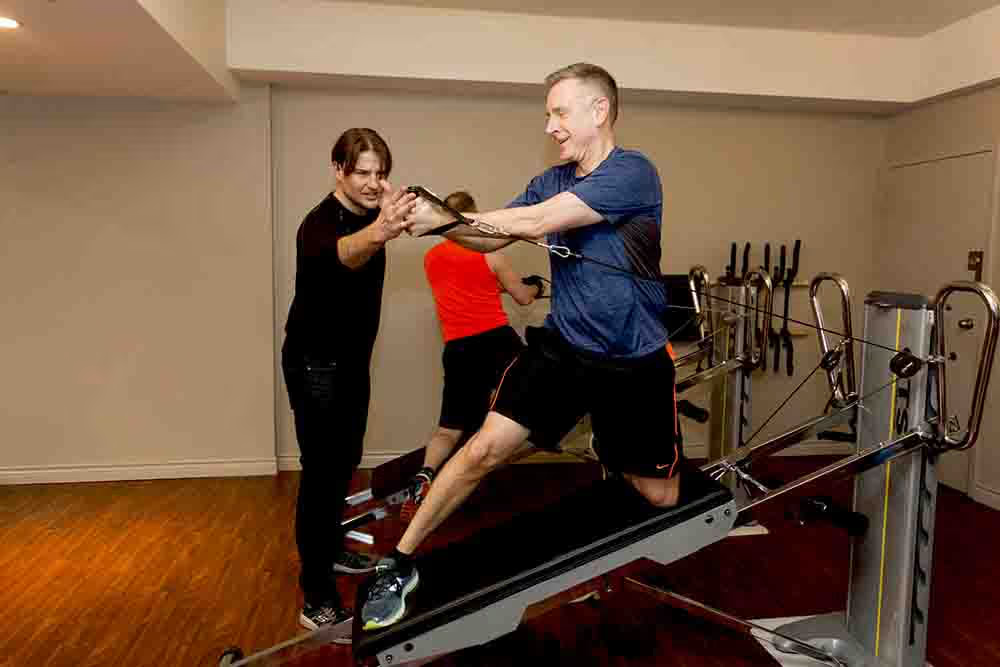
Real Results from Vancouver Adults 40+
Personal Training Reviews from Google | 97 Reviews 4.9 Avg Rating
Why Your Body Needs Corrective Exercise After 40
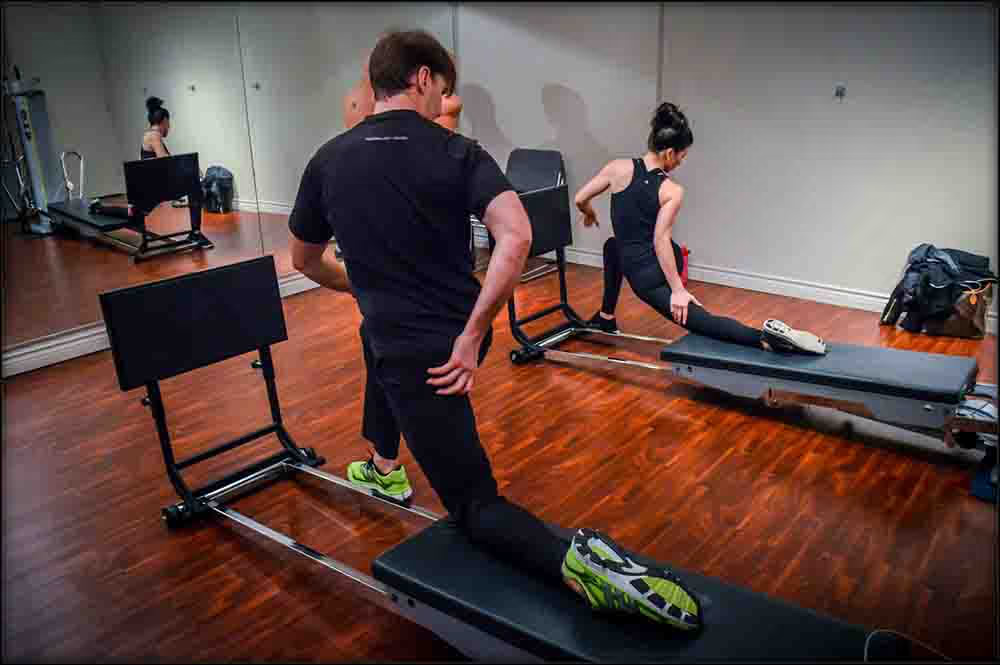
Movement Patterns Change With Age
Years of sitting at desks, compensating for old injuries, or favoring one side create dysfunctional movement patterns. Your shoulders round forward. Your hips become tight. Muscles that should activate don't fire properly. These compensations feel normal until they start causing chronic pain, reduced mobility, or new injuries. Addressing these issues often begins with targeted posture correction to restore proper alignment before progressing into strength work. Corrective exercise identifies these faulty patterns and systematically corrects them before they sideline you.
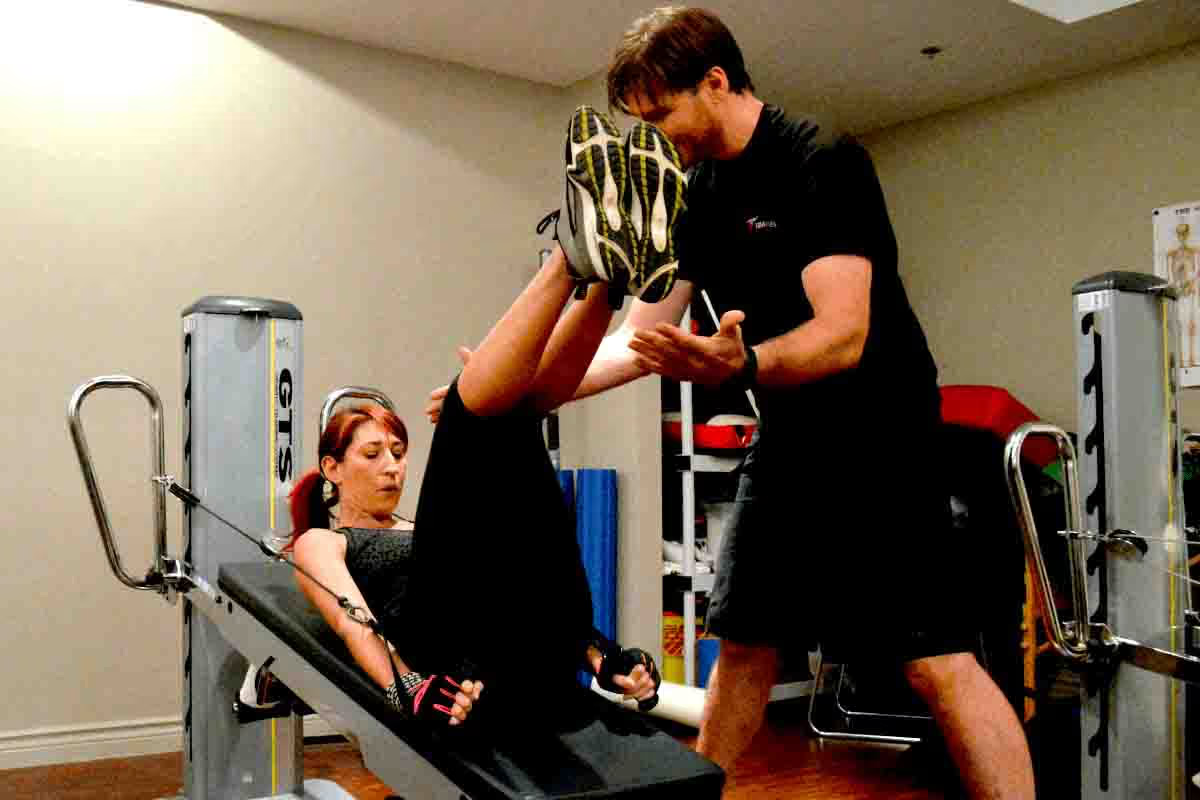
The Post-Physiotherapy Gap
Physiotherapy gets you pain-free. Corrective exercise keeps you that way. Most physio programs end once acute pain resolves, but the underlying movement dysfunction remains. Without addressing these patterns, you're likely to re-injure or develop new problems. Our program bridges this gap, taking you from pain-free to movement-confident with sustainable strength that prevents future issues.
Traditional Training Can Make It Worse
Jumping into regular strength training with faulty movement patterns reinforces the problem. You're essentially training your body to move incorrectly under load, which accelerates joint wear and increases injury risk. Corrective exercise establishes proper movement foundations first, ensuring every exercise builds strength without creating new imbalances or aggravating existing issues.
What Is Corrective Exercise
Corrective exercise is a specialized approach that identifies and fixes faulty movement patterns causing pain, stiffness, or injury risk. Unlike traditional exercise that simply builds strength or endurance, corrective exercise addresses the root cause of movement dysfunction.
The process involves three key phases. First, comprehensive movement assessment identifies which muscles are overactive (tight and dominant) and which are underactive (weak and inhibited). Second, targeted exercises release overactive muscles through myofascial techniques and stretching, then activate underactive muscles through specific strengthening. Third, integration work retrains proper movement patterns so your body automatically moves correctly during everyday activities and exercise.
At TSquared, we use the Gravity Training System as our primary corrective exercise tool. This unique equipment provides low-impact resistance that protects joints while allowing precise movement control. The adjustable incline system lets us target specific muscles and movement patterns without the joint stress of traditional weights or high-impact exercises that often aggravate existing problems.
Common Movement Dysfunctions We Address
Forward Head Posture & Rounded Shoulders
Years of desk work create this classic pattern where your head juts forward and shoulders round, leading to neck pain, upper back tension, and shoulder impingement. We systematically release tight chest and neck muscles while strengthening weak upper back and neck stabilizers, restoring proper cervical and thoracic alignment.
Anterior Pelvic Tilt & Lower Back Pain
Tight hip flexors and weak glutes cause your pelvis to tilt forward, creating excessive lower back arch and chronic pain. This pattern is extremely common in adults over 40 who sit extensively. Our program releases hip flexors through specific stretches, then activates glutes and core to restore neutral pelvic position and eliminate back pain.
Knee Valgus & Hip Weakness
When your knees cave inward during movement (knee valgus), it indicates weak hip abductors and external rotators. This pattern stresses knee joints and increases ACL injury risk. We strengthen glute medius and hip external rotators using the Gravity System's precise resistance, teaching your body to maintain proper knee tracking during all movements.
Limited Ankle Mobility & Compensatory Patterns
Restricted ankle dorsiflexion forces compensations throughout your kinetic chain during squatting, walking, and stair climbing. You might lean forward excessively, shift weight to your toes, or externally rotate your feet. We improve ankle mobility through specific stretches and movement drills, then retrain proper squat and gait patterns.
Shoulder Internal Rotation & Impingement Risk
Tight internal rotators and weak external rotators cause your shoulders to rotate forward, reducing subacromial space and setting up impingement syndrome. This pattern makes reaching overhead painful and limits functional arm movement. We release anterior shoulder muscles, strengthen posterior rotator cuff, and restore proper shoulder mechanics.
Thoracic Spine Immobility
Reduced mid-back rotation and extension force compensations in your neck and lower back, contributing to pain in both areas. We improve thoracic mobility through specific extension and rotation exercises using the Gravity System, redistributing movement demands more appropriately across your entire spine.
How Our Corrective Exercise Program Works
Comprehensive Movement Assessment (60 minutes, complimentary)
Your first session is a thorough evaluation of how your body moves. Troy observes your posture, watches you perform basic movements like squats and overhead reaches, and tests range of motion in key joints. He identifies overactive muscles (tight and dominant), underactive muscles (weak and inhibited), and faulty movement patterns. You'll receive a detailed explanation of your specific dysfunctions and how they contribute to your pain or movement limitations. This assessment determines your personalized corrective exercise program.
Phase 1 - Inhibit & Lengthen (Weeks 1-3)
Initial sessions focus on releasing overactive muscles through self-myofascial techniques and strategic stretching. You'll learn specific release techniques using foam rollers and massage tools, followed by targeted stretches for your tight muscle groups. This phase prepares muscles for the activation work ahead by improving tissue extensibility and reducing neural drive to chronically tight areas. Most clients notice immediate improvements in range of motion and reduced muscle tension.
Phase 2 - Activate (Weeks 4-6)
With overactive muscles released, we activate underactive muscles through isolated strengthening exercises using the Gravity Training System. These aren't your typical strength exercises. We use specific positions and movements designed to wake up dormant muscles and improve their firing patterns. For example, if your glute medius isn't activating properly, we'll use precise hip abduction exercises with controlled resistance that force this muscle to engage without compensation from other muscle groups.
Phase 3 - Integration (Weeks 7-10)
Integration work retrains proper movement patterns using compound exercises that require multiple muscles and joints working together correctly. You'll perform squats, lunges, rows, and presses with perfect form, ingraining these patterns through repetition. The Gravity System's adjustable resistance lets us progressively challenge your movement quality as it improves. By the end of this phase, proper movement becomes automatic.
Ongoing Maintenance & Strength Building (Week 11+)
Once movement patterns are corrected, you transition to our regular personal training or small group training programs. These maintain your corrected movement patterns while building additional strength, improving cardiovascular fitness, and supporting your long-term health goals. Most clients train twice weekly to maintain results and continue progressing.
Why the Gravity Training System Is Ideal for Corrective Exercise
Joint-Friendly Resistance
Traditional weights and machines create compressive forces that aggravate arthritic joints and previous injuries. The Gravity System uses bodyweight on an adjustable incline, providing resistance without joint compression. This allows us to strengthen muscles and correct movement patterns even if you have significant arthritis, previous surgeries, or chronic joint pain. Most clients train completely pain-free for the first time in years.
Precise Movement Control
Corrective exercise requires perfect form to retrain movement patterns effectively. The Gravity System's guided motion and adjustable resistance let Troy control exactly how you move. Unlike free weights where poor movement patterns can persist, the Gravity System ensures you're moving correctly every repetition. This precision accelerates correction while preventing you from reinforcing faulty patterns.
Progressive Adaptation
As your movement patterns improve, the Gravity System's infinite adjustability allows seamless progression. We gradually increase resistance and movement complexity without sudden jumps that could cause setbacks. This controlled progression ensures your nervous system and musculoskeletal system adapt together, creating lasting changes rather than temporary fixes that disappear when you return to normal activities.
Corrective Exercise vs Traditional Training
Frequently Asked Questions About Corrective Exercise
How is corrective exercise different from physical therapy
Physical therapy focuses on acute injury rehabilitation and pain management, typically ending once pain resolves. Corrective exercise picks up where physio stops, addressing the underlying movement dysfunctions that caused your injury or pain. While physio gets you back to baseline, corrective exercise optimizes your movement patterns to prevent future problems and improve overall function. Many clients continue their recovery through structured post-physio training that focuses on correcting movement patterns and preventing reinjury.
Do I need a referral from my physiotherapist or doctor
No referral is required. However, if you're currently in active physiotherapy treatment, we recommend coordinating with your physiotherapist. Many Vancouver physiotherapists specifically refer clients to TSquared for corrective exercise as the next phase after acute treatment ends. We're happy to communicate with your healthcare providers to ensure a seamless transition.
How long does a corrective exercise program take
Most clients complete the corrective phase in 10-12 weeks training twice weekly. This timeline allows your nervous system and musculoskeletal system to adapt permanently to new movement patterns. Simple dysfunctions may improve faster (6-8 weeks), while complex or long-standing patterns might require 12-16 weeks. After correction, most clients transition to ongoing strength training to maintain results.
How much does corrective exercise cost at TSquared
Private corrective exercise sessions cost $120-130 per hour when purchasing multi-session packages. Your initial movement assessment (60 minutes) is complimentary. Semi-private corrective exercise training (maximum 2 people) costs $60-70 per person per session. Most clients train twice weekly, making investment approximately $960-1,040 monthly for private sessions or $480-560 for semi-private.
Will corrective exercise eliminate my chronic pain
Corrective exercise addresses movement-related pain caused by muscle imbalances, faulty patterns, and joint dysfunction. If your pain stems from movement compensation (most common), corrective exercise can significantly reduce or eliminate it. However, pain from structural damage like advanced arthritis, disc herniation, or nerve compression may require medical intervention. Your free assessment determines whether corrective exercise is appropriate for your specific condition.
Can I do corrective exercise if I have arthritis
Yes. The Gravity Training System's low-impact resistance is specifically suited for arthritic joints. Many TSquared clients with knee, hip, or shoulder arthritis train completely pain-free using corrective exercise. We work around your limitations while improving movement quality and building supporting muscle strength that reduces arthritis symptoms. The key is proper exercise selection and controlled progression.
Do you work with people recovering from surgery
Wear comfortable athletic clothing that allows full range of motion. Shorts or flexible pants work best as Troy needs to observe your knee and hip movement patterns. Athletic shoes with good support are recommended. Our private studio has changing facilities and a shower if needed.
What should I wear to corrective exercise sessions
Yes, once your surgeon and physiotherapist have cleared you for exercise. We work with many clients post-surgery (knee replacement, rotator cuff repair, ACL reconstruction, spinal fusion) to rebuild strength and restore proper movement patterns. Surgery changes how your body moves, and corrective exercise ensures you develop optimal patterns rather than compensatory ones that could cause future problems.
Troy Tyrell's Corrective Exercise Expertise
Troy has dedicated over 20 years to helping Vancouver adults over 40 move better and live pain-free. His certifications in corrective exercise and functional movement assessment, combined with decades of hands-on experience, allow him to quickly identify movement dysfunctions and create effective correction programs.
What sets Troy apart is his systematic yet adaptable approach. He doesn't apply generic corrective protocols. Every program is built specifically for your movement dysfunction, injury history, pain patterns, and goals. His calm, patient coaching style creates an environment where you feel comfortable asking questions and working through movement challenges.
Troy has worked with hundreds of clients recovering from injuries ranging from chronic lower back pain and shoulder impingement to post-surgical rehabilitation. His extensive experience with adults over 40 means he understands the unique challenges of aging bodies and knows exactly how to progress corrective exercise safely without causing setbacks.
What Clients Say About Our Corrective Exercise Program
TSquared maintains a 4.9-star rating across 97 Google reviews, with clients consistently praising Troy's expertise in movement correction and the effectiveness of the Gravity Training System for injury recovery.
The gravity training workout at TSquared has been amazing for me to get back into fitness since I was injured in a cycling accident. I can get a great calorie burn without aggravating my hip injury. Troy is helpful and the machine adjusts to your ability. There are so many exercises in a session, but you don't need to run around a gym or wait for a machine. The gravity machines are so versatile - it's far more efficient than traditional personal training. A bonus is using the pool and/or hot tub after class.
After years of lower back pain from sitting at a desk, I finally found relief through Troy's corrective exercise program. He identified that my hip flexors were extremely tight and my glutes weren't activating properly. Within 6 weeks of targeted work, my back pain decreased by 80%. Now I can play with my grandchildren without constantly worrying about throwing my back out.
I came to TSquared after completing physio for a rotator cuff injury. My shoulder felt better, but I was terrified of re-injuring it. Troy's corrective exercise program taught me proper shoulder mechanics and gradually rebuilt my confidence. The Gravity Training System was perfect because I could strengthen my shoulder without the fear of dropping weights. Six months later, I'm stronger than before the injury.
Conveniently Located in Downtown Vancouver
TSquared Personal Training
128 W Pender St #102 Vancouver, BC V6B 1R8
Phone: (604) 250-9784
TSquared's private studio is located inside The Sun Tower at 128 W Pender St #102 in the heart of downtown Vancouver. This central location makes corrective exercise training accessible from neighborhoods across the city. Downtown Vancouver studio
Transit Access
We're steps from Stadium-Chinatown SkyTrain station (Expo and Millennium Lines), making us easily reachable via public transit. Multiple bus routes stop within two blocks. Cycling? Secure bike racks are available at The Sun Tower entrance.
Parking Options
Paid parking is available at a nearby parkade (entrance on Beatty Street) and multiple other nearby lots. Street parking (metered) is available on surrounding streets.
Neighborhoods We Serve
- Yaletown (5-minute walk)
- Gastown (7-minute walk)
- Coal Harbour (10-minute drive)
- West End (12-minute drive)
- Chinatown (5-minute walk)
- Mount Pleasant (10-minute drive)
- Kitsilano (15-minute drive)
Studio Amenities
Our private fitness studio provides a distraction-free environment for corrective exercise. Changing facilities and showers are available.
Schedule Your Free Corrective Exercise Assessment
Stop compensating. Start moving correctly.
Your complimentary 60-minute movement assessment identifies exactly what's causing your pain or limitation and shows you the path to correction.
Located at: 128 W Pender St #102 (inside The Sun Tower), Downtown Vancouver
Steps from Stadium-Chinatown SkyTrain Station