

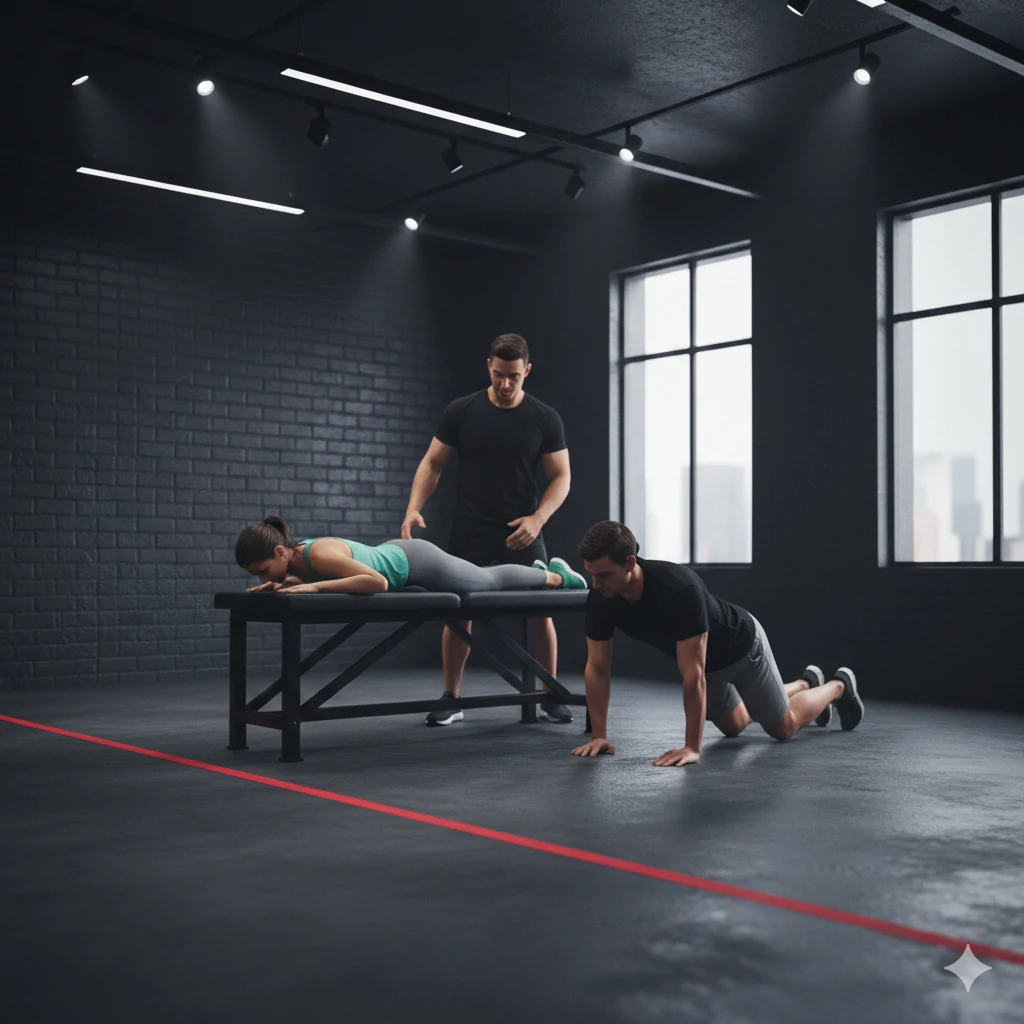
Is Personal Training Safe If You Have Back Pain?
If you're dealing with back pain, the idea of starting a training program can feel risky. It's a reasonable hesitation. Plenty of people have made a sore back worse by jumping into a generic gym program, copying an exercise from a video, or pushing through pain because "no pain, no gain" is what they were taught.
The short answer is yes, personal training can be safe and genuinely helpful for back pain, but only when the program is built around your specific pain, not a one-size-fits-all workout. The difference comes down to how the session is designed and who is coaching it.
Why People With Back Pain Hesitate to Start Training
Most of the hesitation we hear at our downtown Vancouver studio comes down to a few common fears: that lifting anything heavier than groceries will trigger a flare-up, that a trainer will push a generic program without understanding the injury, or that a bad experience at a big-box gym will repeat itself. These are fair concerns. A trainer without experience in corrective exercise can absolutely make back pain worse by using the wrong exercises, poor coaching cues, or loads that are too heavy too soon.
What the Research Says About Exercise and Back Pain
Up to 80% of adults will experience low back pain at some point in their lives, and for most people, prolonged rest is not the answer. Current research consistently supports staying active and gradually strengthening the muscles that support the spine, specifically the core, glutes, and back extensors, as one of the most effective long-term approaches to managing back pain. Movement, done correctly, tends to help far more than avoiding it.
That said, "exercise helps back pain" is not the same as "any exercise helps back pain." The type of movement, the load, and the progression all matter.
How We Modify Sessions for Back Pain
Every new client starts with a movement assessment before any exercise happens. This is where we identify what's aggravating your pain, which movements you can tolerate right now, and which ones need to be avoided or modified. From there, sessions are built around a few principles:
Joint-friendly loading. Our Gravity Training System uses constant, controlled resistance instead of free weights slamming through a joint at the bottom of a rep. That means we can load the muscles that stabilize your spine without the jarring impact that often triggers pain.
Progressive, not aggressive. We start with the exercises your back can currently tolerate and build from there. Nobody is handed a heavy deadlift in week one.
1-on-1 or small group attention. Because our small group classes are capped at 5 people and our private sessions are fully 1-on-1, your form gets watched and corrected in real time, not glanced at every few minutes.
Communication over ego. If something doesn't feel right during a session, we adjust it immediately. There's no reason to push through sharp or worsening pain to finish a set.
What Not to Do When You Have Back Pain
A few patterns we see cause the most trouble for people with back pain:
Jumping into heavy squats or deadlifts with unchecked form, especially in a crowded gym where nobody is watching your technique. High-impact classes that involve a lot of jumping, twisting, or fast spinal flexion before your back has built the strength to handle it. And perhaps the most common mistake: pushing through sharp pain because you assume some discomfort is just part of getting stronger. Muscle fatigue is normal. Sharp, radiating, or worsening pain is not something to train through.
When to See a Doctor First
Personal training is not a replacement for medical care. If you're experiencing numbness, tingling, or weakness in your legs, pain that radiates below the knee, or back pain following a specific injury or accident, see a physician or physiotherapist before starting any exercise program. For general, non-specific low back pain without those red flags, supervised strength training is widely supported as part of a recovery plan, but it should complement medical guidance, not replace it.
Many of our clients come to us after completing physiotherapy, looking to bridge the gap between rehab and full strength training. If that sounds like where you are, our Low Back Pain Strength Program is built specifically for that transition, and it pairs well with the joint-friendly approach we also use for adults 40 and over managing chronic pain alongside general strength goals.
Getting Started Safely
If back pain has been holding you back from training, the safest first step is a conversation, not a workout. Your first session at TSquared includes a movement assessment and an honest look at what your back can handle right now, with no pressure to push further than that.


