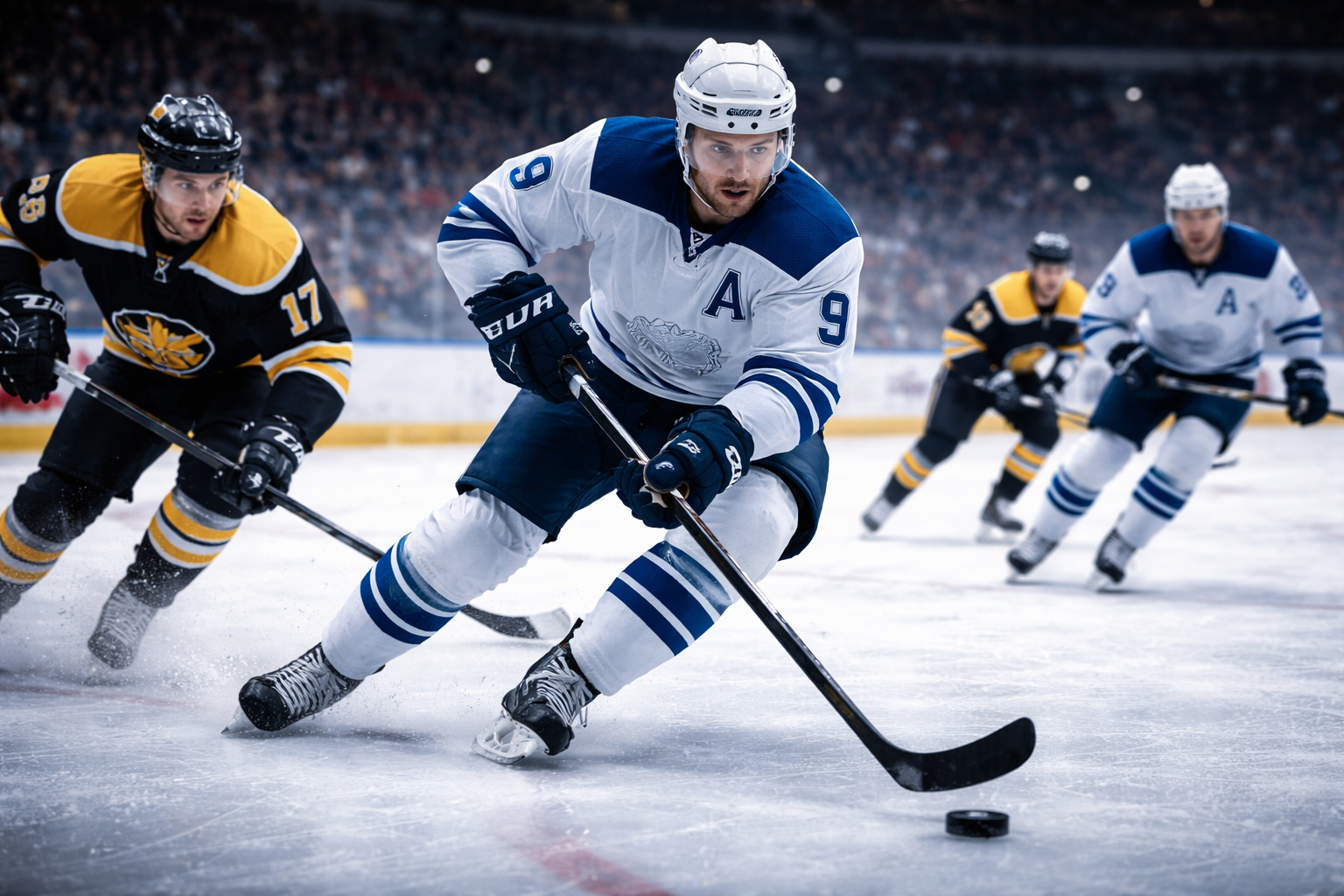
Hockey does not reward average preparation, thats where Personal Training for Hockey Players in Vancouver, comes in. It rewards athletes who can accelerate faster, stay lower, absorb contact, rotate through the core, and repeat high power outputs shift after shift. Whether you play beer league at Britannia, junior hockey, university, or you are a former competitive player trying to keep your edge, generic gym workouts fall short fast.
At Tsquared Personal Training, hockey athletes train differently. This is not bodybuilding. This is not random circuits. This is performance-based personal training built around skating mechanics, collision tolerance, rotational power, and joint longevity. All delivered in a private downtown Vancouver studio inside The Sun Tower.
Why Most Hockey Players Plateau in the Gym
Most hockey players already work hard. The problem is direction.
Common issues I see when hockey players come in:
- Strong legs but poor lateral power
- Big lifts but slow first-step acceleration
- Tight hips and adductors that limit stride length
- Core strength that collapses under rotation and contact
- Shoulder strength that looks good until it meets a board battle
Hockey is a multi-plane sport. Linear lifting alone does not carry over well to skating, checking, or shooting. That is where structured personal training makes the difference.
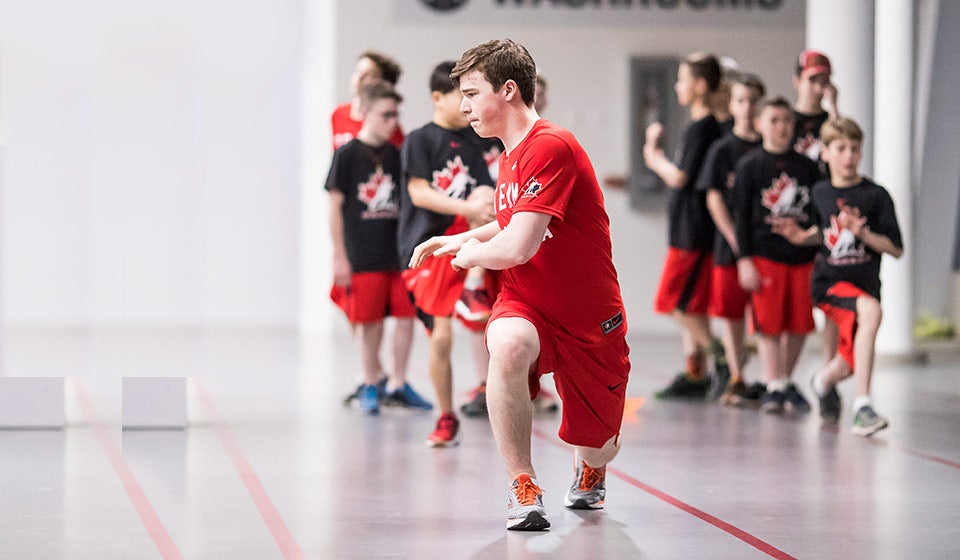

How Personal Training for Hockey Players Is Different at Tsquared
At Tsquared Personal Training, hockey programs are built around how the body actually moves on the ice.
Key focus areas include:
1. Lower Body Power Without Knee Destruction
Hockey players need strong quads, glutes, and hamstrings, but not at the expense of hip and knee health. Training blends traditional strength work with joint-friendly loading and controlled deceleration.
- Squat and hinge patterns adapted for skating posture
- Single-leg strength for stride balance
- Posterior chain work for explosive push-off
This is why many hockey clients report stronger skating with less knee pain within weeks.
2. Rotational Core Strength That Transfers to the Ice
Shooting, passing, and absorbing contact all depend on rotational control.
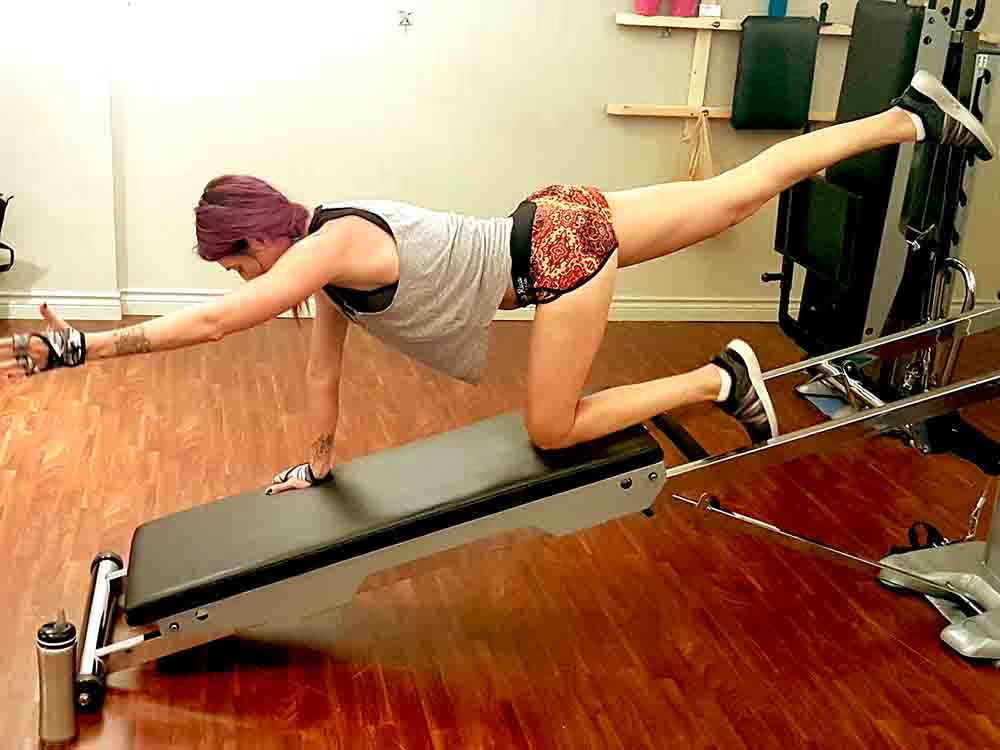
Gravity-based and cable-based training allows:
- High rotational load with lower spinal compression
- Anti-rotation strength for board battles
- Core engagement through full ranges of motion
This is a major advantage over floor-only core training.
3. Shoulder and Upper Body Armor
Hockey shoulders take abuse. Poor training leads to chronic pain and lost strength.
Programs emphasize:
- Scapular stability
- Controlled pressing and pulling
- Grip strength for stick control and battles
The goal is durable strength, not just bigger numbers.
Gravity Training and Multi-Plane Strength for Hockey
One of the biggest differentiators at Tsquared is gravity training, combined with free weights and traditional strength tools.
Gravity-based systems allow:
- Smooth resistance through rotation
- Reduced joint stress under high load
- Faster learning curve for complex movement patterns
For hockey players, this means better power transfer without grinding joints into dust. It also pairs exceptionally well with barbell lifts, not as a replacement, but as a multiplier.
Real-World Result From a Hockey Client
From Sore and Slower to Stronger and Faster
One downtown Vancouver client, a former junior player now in competitive men’s league hockey, came in frustrated. He felt strong in the gym but slower on the ice and constantly sore through hips and lower back.
After eight weeks of structured personal training:
- Improved lateral push and acceleration
- Reduced hip tightness
- Increased shot power without shoulder irritation
His words:
“This is the first time gym training actually made me better on the ice instead of just tired.”
In-Season vs Off-Season Hockey Training
Off-season focus
- Strength building
- Power development
- Correcting asymmetries
- Increasing joint capacity
In-season focus
- Strength maintenance
- Injury prevention
- Mobility and recovery
- Keeping legs fresh, not fried
Personal training allows precise adjustment based on games, travel, and workload. No cookie-cutter programs.
Vancouver Hockey Players Train Smarter Downtown
Tsquared Personal Training works with:
- Adult league players
- Junior and university athletes
- Former competitive players staying game-ready
- Professionals who still love hard hockey
The downtown Vancouver location is ideal for players working near BC Place, Yaletown, or the West End who want focused training without the chaos of big-box gyms.
Call to Action
If hockey is still important to you, your training should reflect that.
Personal training for hockey players at Tsquared Personal Training is built around skating power, rotational strength, and durability so you can play harder, longer, and with more confidence.
Book a private session or small-group assessment at
👉 https://www.tsquaredvancouverpersonaltraining.com/