
Rebuild Your Shoulder Strength Without Fear
If shoulder pain is limiting what you can do, you're dealing with more than physical discomfort. There's the frustration of movements you used to take for granted, the anxiety about making things worse, and the uncertainty about whether you'll get back to normal. At TSquared Vancouver Personal Training, we specialize in helping adults over 40 rebuild shoulder strength after rotator cuff injuries, chronic pain, and surgery through our injury rehabilitation programs, using our unique Gravity Training System in a private downtown studio.
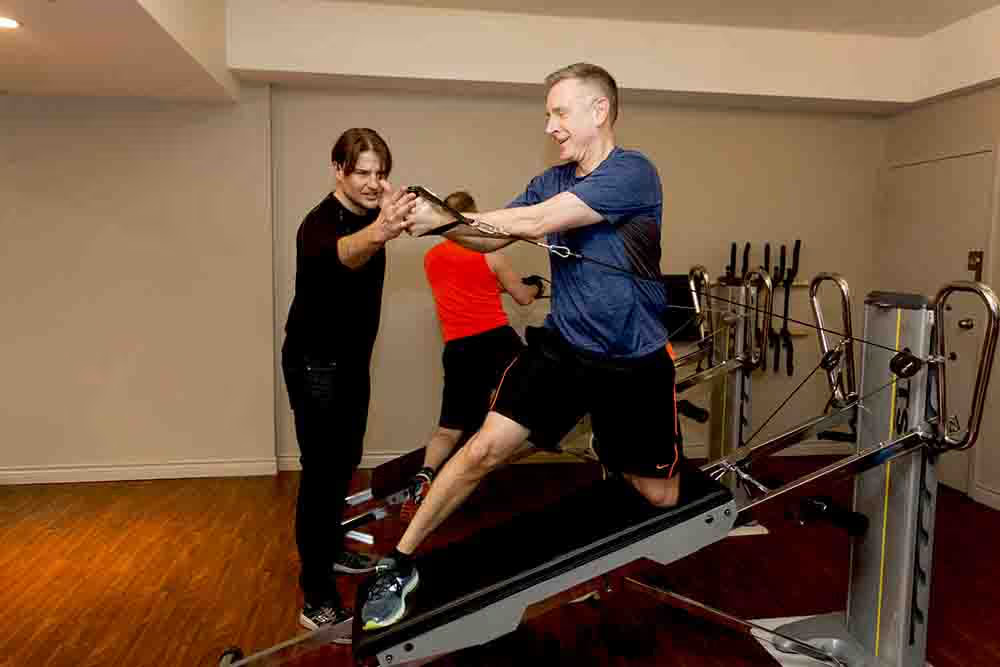
Real Results from Vancouver Adults 40+
Personal Training Reviews from Google | 97 Reviews 4.9 Avg Rating
Why TSquared For Shoulder Rehab Training
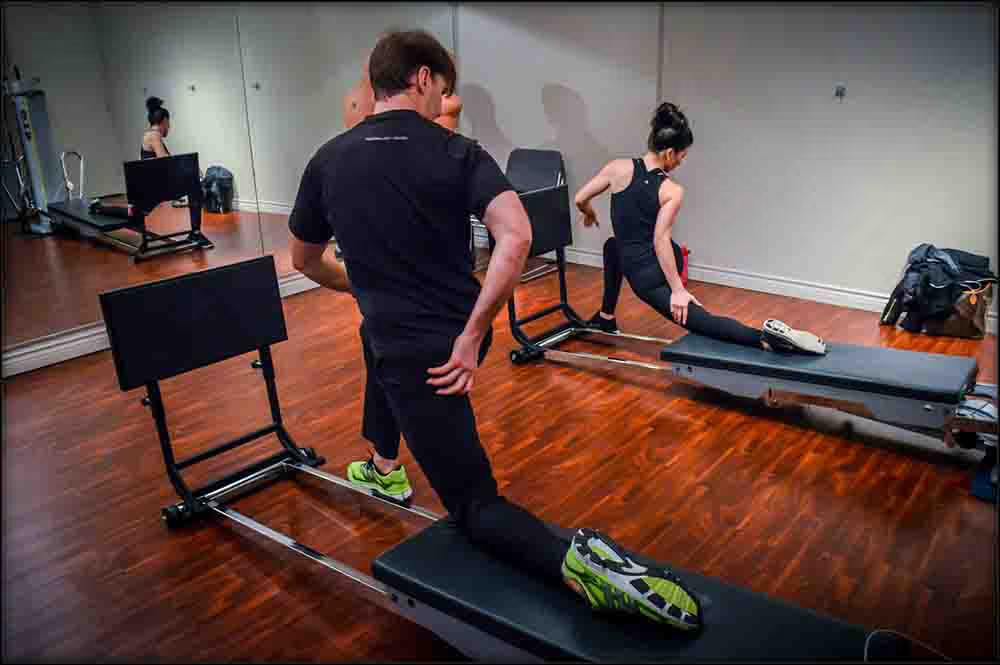
Post-Physio Strength Building Specialty
Most physiotherapy clinics focus on pain relief and basic mobility. We bridge the critical gap between physio discharge and full function. Troy has spent 20+ years developing protocols specifically for adults over 40 who need to rebuild strength without re-injury risk. Our Gravity Training System provides joint-friendly resistance that strengthens rotator cuff muscles while protecting healing tissue. You get the confidence of progressive overload without the anxiety of traditional gym equipment.
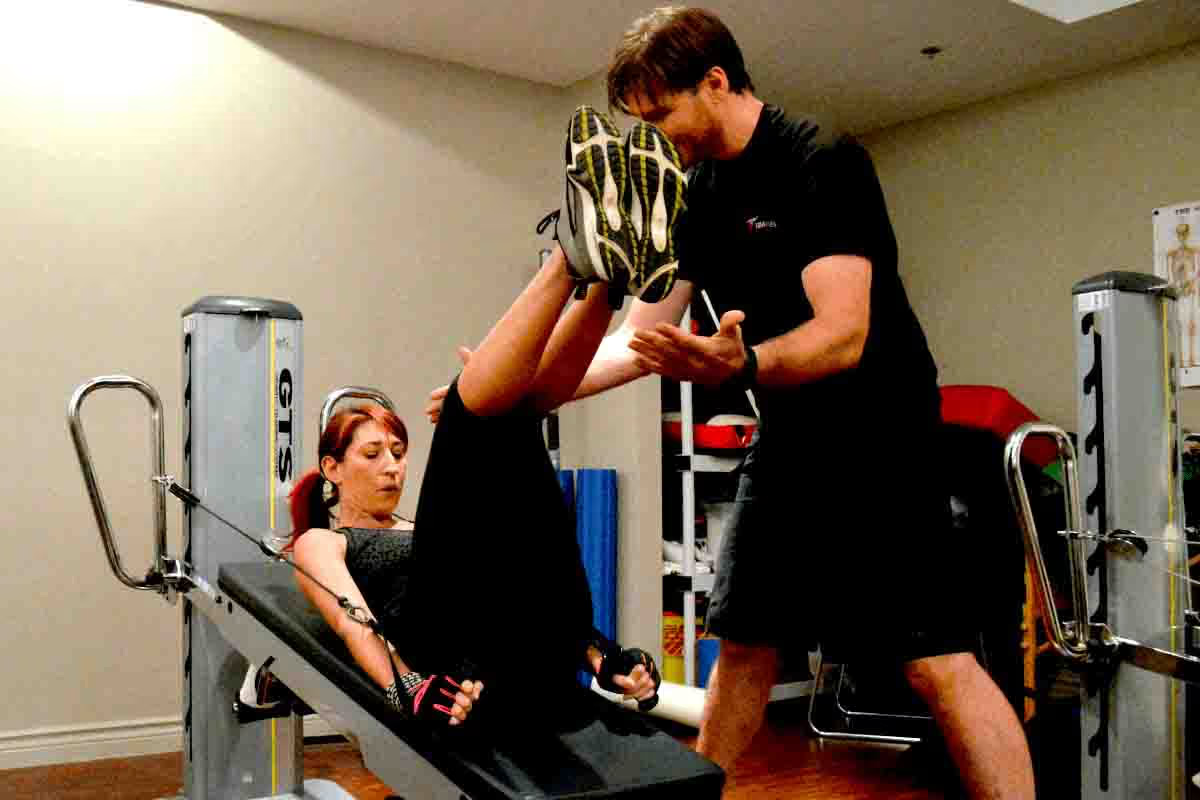
Maximum 5 People Per Session
Unlike crowded gym classes where instructors split attention across 15-20 people, Troy never trains more than 5 clients simultaneously. This means constant form correction, immediate exercise modification when needed, and personalized progression based on how your shoulder responds session to session. Every repetition is supervised. Every movement pattern is coached. Your shoulder rehabilitation isn't one-size-fits-all, and neither is our training approach.
Private Downtown Studio Environment
Located at 128 W Pender St #102 in the heart of downtown Vancouver, our private studio eliminates gym intimidation and comparison anxiety. No waiting for equipment. No crowds watching you struggle. No pressure to keep up with 25-year-olds doing exercises your shoulder can't handle yet. Just focused, progressive shoulder strengthening in a supportive environment designed specifically for adults dealing with injuries and chronic pain.
Understanding Your Shoulder Pain and Recovery Needs
Your shoulder is the most mobile joint in your body, which makes it incredibly useful and frustratingly vulnerable. That mobility comes from four small rotator cuff muscles that stabilize the joint through every reaching, lifting, and overhead movement. When these muscles are injured, inflamed, or weakened from disuse, even simple daily tasks become painful reminders of limitation.
Adults over 40 face specific shoulder challenges that younger populations don't deal with. Decades of repetitive movements create wear patterns. Desk work leads to postural compensations that stress the rotator cuff. Reduced tissue elasticity means injuries heal slower and require more careful progression. The fear of re-injury can be as limiting as the pain itself, creating movement avoidance that leads to further weakness.
Physiotherapy addresses acute pain and restores basic movement. But most people are discharged from physio before they've rebuilt the strength needed for normal life. You can raise your arm without pain, but you can't put luggage in an overhead bin. You can reach behind your back, but you can't throw a ball with your grandkids. That's where specialized strength training becomes essential.
Troy works with clients recovering from rotator cuff tears, frozen shoulder, shoulder impingement, post-surgical rehabilitation, chronic pain from desk work, and the general shoulder weakness that develops when people avoid using their arm because of discomfort. The common thread isn't the specific diagnosis, it's the need for progressive, supervised strength building that respects healing timelines while pushing past protective limitations.
Shoulder Conditions We Specialize In
Rotator Cuff Tears and Strains
Whether partial or complete, surgically repaired or healing conservatively, rotator cuff injuries require specific strengthening protocols. We focus on internal and external rotation strength, scapular stability, and progressive loading that protects healing tissue while preventing compensatory movement patterns. Most clients see functional improvement within 6-8 weeks of consistent training.
Shoulder Impingement Syndrome
When rotator cuff tendons get pinched between the shoulder bones during movement, even simple overhead reaching can become painful and restrictive. Shoulder impingement responds especially well to scapular strengthening, rotator cuff activation, and posture correction and injury rehabilitation that restores proper shoulder alignment. Poor posture—such as rounded shoulders or a forward head position—can narrow the subacromial space, increasing irritation during daily movements. By improving posture and strengthening the supporting muscles around the shoulder, pressure on the tendons is reduced, allowing pain-free movement and long-term joint health. The Gravity System’s adjustable angles let us target these muscles safely without recreating the painful impingement position.
Frozen Shoulder (Adhesive Capsulitis)
The progressive stiffness and pain of frozen shoulder can last 12-24 months without proper intervention. We combine gentle mobility work with strength training that works within your current range of motion. As the capsule releases, we progressively load the shoulder to prevent the muscle atrophy that often accompanies this condition.
Post-Surgical Rehabilitation
After rotator cuff repair, labrum surgery, or shoulder replacement, you need progressive strengthening that respects surgical healing protocols while preventing the weakness and movement fear that often persist after formal physiotherapy ends. We work closely with surgical timelines, typically beginning strength work 8-12 weeks post-surgery once cleared by your surgeon.
Chronic Desk Worker Shoulder Pain
Years of forward shoulder posture from computer work creates muscle imbalances that stress the rotator cuff. Tight chest muscles, weak upper back muscles, and forward head position all contribute to chronic shoulder aching. We address these patterns through targeted strengthening of posterior shoulder and upper back muscles while lengthening tight anterior structures.
Shoulder Instability and Dislocations
If your shoulder has dislocated or feels unstable during certain movements, you need specific strengthening of the dynamic stabilizers combined with neuromuscular training that retrains protective reflexes. The Gravity System's controlled resistance makes this strengthening safer than free weights while still building the stability needed for confidence in daily activities.
Troy Tyrell's Corrective Exercise Expertise
The Gravity Training System isn't typical gym equipment. It's a specialized resistance system that uses your own body weight at various angles to create joint-friendly strengthening. This approach is grounded in the same principles used in our corrective exercise programs, which focus on restoring proper movement patterns before increasing load or complexity. For shoulder rehabilitation, this provides critical advantages that traditional weights and machines can't match.
First, the variable angle positioning lets us strengthen your rotator cuff through ranges of motion that are safe for your specific injury. If overhead reaching is painful, we train at angles below 90 degrees. As your tissue heals and strength improves, we progressively increase the angle. This gradual progression builds strength without triggering pain or re-injury.
Second, the system provides smooth, controlled resistance without the jerky movements that can stress healing tissue. Free weights require muscle stabilization throughout the movement, which can overload a weak rotator cuff. The Gravity System's guided motion pattern removes that stabilization demand early in rehabilitation, letting you focus on pure strengthening.
Third, the eccentric (lowering) phase is automatically controlled, which matters because eccentric loading is where most re-injuries happen. When you lower a dumbbell with a weak rotator cuff, fatigue can cause loss of control and tissue stress. The Gravity System's design prevents this while still providing the eccentric strengthening that's crucial for tissue remodeling.
Most importantly, the system allows micro-progressions that match tissue healing rates. We can adjust resistance by changing body angle incrementally rather than jumping 5-10 pounds like you would with dumbbells. This precision prevents the frustrating cycle of feeling better, doing too much too soon, and setting back your progress.
Your Shoulder Rehab Training Process
Step 1: Comprehensive Shoulder Assessment (Session 1, 60 minutes)
Troy evaluates your shoulder through active and passive range of motion testing, strength assessment of all rotator cuff muscles, scapular movement patterns, and postural analysis. We review your injury history, medical imaging if available, current symptoms, and functional limitations. This assessment identifies specific weaknesses, compensatory patterns, and pain triggers that guide your entire program. You'll leave session one with a clear understanding of why your shoulder hurts and exactly what we need to strengthen.
Step 2: Foundation Phase (Weeks 1-3)
We begin with pain-free ranges of motion, focusing on scapular control and basic rotator cuff activation. Exercises target muscle re-education, proprioception (your shoulder's awareness of position), and establishing movement patterns without compensation. Training frequency is typically 2-3 times weekly. Most clients notice reduced pain and improved confidence in daily movements within the first two weeks as neurological patterns improve before significant strength gains.
Step 3: Progressive Loading Phase (Weeks 4-8)
As pain reduces and movement patterns improve, we systematically increase resistance and expand range of motion. The Gravity System lets us progress by adjusting body angle rather than weight, providing smoother advancement. We introduce multi-plane movements that challenge shoulder stability in functional patterns. You begin handling resistance in ranges that were painful weeks earlier. Most clients regain functional strength for daily activities during this phase.
Step 4: Functional Integration Phase (Weeks 9-16)
We transition from isolated rotator cuff exercises to integrated movements that replicate your real-life needs. This includes overhead pressing for reaching high shelves, pulling movements for activities like gardening, and rotational exercises for sports or recreational activities. Training intensity increases as tissue tolerance improves. The goal is not just pain-free movement but confidence under load and fatigue.
Step 5: Maintenance and Long-term Health (Week 16+)
Once you've rebuilt strength and function, the focus shifts to maintaining shoulder health and preventing future problems. Many clients reduce training frequency to 1-2 times weekly. We emphasize exercises you can maintain independently while providing periodic check-ins to ensure movement quality doesn't degrade. The long-term goal is a resilient shoulder that handles life's demands without constant attention.
Who Benefits Most From Our Shoulder Training
Adults Over 40 With Chronic Shoulder Issues
You've dealt with shoulder pain for months or years. Physio helped initially but you plateaued. You're stronger than you were but not strong enough to do everything you want. Daily activities are manageable but you avoid overhead reaching, carrying heavy items, or certain recreational activities. You need progressive strengthening that respects age-related recovery needs while building real functional capacity.
Post-Surgery Patients Cleared For Strengthening
You've completed post-operative physiotherapy and your surgeon has cleared you for progressive resistance training. Basic range of motion is restored but your shoulder feels weak and unstable. You're anxious about doing too much too soon. You need someone who understands surgical healing timelines and can build strength systematically without jeopardizing surgical repairs. Troy has worked with dozens of post-surgical shoulders and knows exactly how to progress.
Active Adults Sidelined By Shoulder Limitations
You used to be active but shoulder pain has forced you to stop activities you love. Maybe it's tennis, golf, swimming, or just playing with grandchildren. Your doctor says surgery isn't needed yet, but physio exercises haven't restored the strength you need. You're frustrated by generic advice to avoid aggravating activities. You need someone who will actually rebuild the capacity for the movements you care about.
Training Investment and Packages
All packages include comprehensive shoulder assessment, customized exercise programming, form coaching on the Gravity Training System, and ongoing program adjustments based on your progress. Free first session lets you experience the training approach and private studio environment before committing.
Common Questions About Shoulder Rehab Training
How is personal training different from physiotherapy for shoulder rehab?
Physiotherapy focuses on pain reduction, restoring range of motion, and addressing acute injury through manual therapy and therapeutic exercises. Personal training picks up where physio ends, focusing on building functional strength, improving movement capacity under load, and preventing future injuries. Think of physio as getting you from injured to pain-free basic function, and personal training as getting you from basic function to robust capacity for everything you want to do.
How long until I see improvement in shoulder strength and function?
Most clients notice reduced pain and improved movement quality within 2-3 weeks as neurological patterns improve. Measurable strength gains typically appear around week 4-6. Functional improvements for daily activities usually occur by week 8-10. Full rehabilitation to pre-injury capacity can take 12-16 weeks depending on injury severity and how long you've been dealing with the issue. Chronic problems that developed over years need months of consistent training to fully resolve.
Do I need to be cleared by my doctor or physiotherapist first?
Yes, if you're recovering from surgery or acute injury within the past 6 weeks. For chronic shoulder pain without recent injury or surgery, medical clearance is recommended but not always required. Troy can assess your readiness during the free consultation. If you're currently in physiotherapy, we can coordinate with your physio to ensure complementary rather than conflicting approaches. Many physios refer clients to us once acute treatment is complete.
What if certain exercises cause pain?
Some discomfort during rehabilitation is normal as you challenge weakened tissue. Sharp pain, pain that lasts more than 2 hours after training, or pain that worsens over multiple sessions all signal that we need to modify approach. Troy adjusts exercises immediately when pain occurs, either by changing angle, reducing resistance, or substituting alternative movements. The goal is progressive challenge without tissue irritation. You should feel muscular fatigue and mild soreness, not joint pain or sharp discomfort.
Can I train if I have limited range of motion?
Absolutely. We work within your current range of motion while gradually expanding it through proper strengthening. The Gravity System's adjustable angles let us provide effective resistance even with restricted movement. Many clients start unable to raise their arm above shoulder height and progressively improve as strength supports increased range. Limited mobility isn't a barrier to starting, it's exactly what the training addresses.
What's your training frequency recommendation?
Most shoulder rehab clients train 2-3 times weekly during the first 8-12 weeks. This frequency provides consistent stimulus for tissue adaptation while allowing adequate recovery between sessions. Once functional capacity is restored, many clients reduce to 1-2 times weekly for maintenance. Training more than 3 times weekly rarely accelerates results because tissue remodeling needs recovery time. Less than twice weekly makes progress frustratingly slow for most people.
Do you work with people who've been told they need surgery?
Yes. Many rotator cuff tears, impingement issues, and other shoulder problems improve significantly with proper strengthening, potentially avoiding surgery. However, we're realistic about limitations. Some conditions require surgical repair for full recovery. Troy can help you build strength to either avoid surgery or optimize your pre-surgical condition for better post-operative outcomes. If you do eventually need surgery, you'll be stronger going in and recover faster coming out.
What makes your approach better than exercising at a regular gym?
Regular gyms have three critical limitations for shoulder rehab. First, equipment is designed for healthy shoulders, making it difficult to modify exercises for injury. Second, trainers at commercial gyms rarely have specialized experience with shoulder rehabilitation. Third, the environment encourages pushing too hard too soon. At TSquared, equipment is specifically designed for joint-friendly strengthening, Troy has 20+ years experience rehabilitating adult shoulders, and the private studio environment removes pressure to keep up with others. You get expert guidance instead of generic advice.
Convenient Downtown Vancouver Location
TSquared Personal Training
128 W Pender St #102 Vancouver, BC V6B 1R8
Phone: (604) 250-9784
TSquared Vancouver Personal Training is located at 128 W Pender St #102 in the heart of downtown Vancouver, easily accessible from all major neighborhoods and by SkyTrain.
For drivers, convenient parking is available near the studio, with numerous nearby lots and street parking options. The central location makes it easy to fit training sessions into busy work schedules, whether you're coming from North Vancouver, Burnaby, Richmond, or anywhere in the Lower Mainland.
The studio is also within a 10-minute walk from Coal Harbour, Yaletown, and the West End, making it ideal for residents of these neighborhoods who prefer walking or cycling to their training sessions. Located near landmarks like Canada Place, Vancouver Lookout, and Robson Street, the studio is easy to find whether you're a Vancouver local or new to the city.
What to Expect In Your First Sessions
Your free trial session focuses on assessment and education. Troy will spend 15-20 minutes evaluating your shoulder's current state through range of motion testing, strength assessment, and postural analysis. You'll discuss your injury history, what you've tried already, and what functional goals matter most to you. Then you'll experience 2-3 exercises on the Gravity System so you understand how the training feels and whether the approach resonates with you.
If you decide to continue, sessions two through four establish your foundation. These sessions focus on pain-free movement patterns, basic rotator cuff activation, and scapular control. The exercises might feel surprisingly easy, and that's intentional. Early rehabilitation is about movement quality and neurological patterns, not heavy resistance. Many clients are frustrated by how basic the exercises are, but this foundation prevents the compensatory patterns that cause long-term problems.
From weeks two through six, you'll notice progressive increases in resistance and range of motion. Exercises that were pain-free at 45 degrees gradually expand to 90 degrees and beyond. The Gravity System's adjustable angles make these progressions smooth and confidence-building. Troy constantly monitors your form, making micro-adjustments to prevent compensation. This is also when most clients start noticing functional improvements in daily activities.
By weeks six through twelve, training shifts toward integrated movements that challenge your shoulder in multiple planes simultaneously. You're handling resistance that seemed impossible in week one. The focus becomes building capacity for the specific activities you want to return to, whether that's recreational sports, yard work, or simply overhead reaching without fear.
Throughout the process, Troy adjusts programming session to session based on how your shoulder responds. Some weeks you progress faster than expected. Other weeks you need to maintain current load while tissue adapts. This responsive approach prevents the rigid protocols that work for some people but not others. Your shoulder rehabilitation is customized to your specific tissue tolerance and healing timeline.
Our Results Guarantee
If you don't see measurable improvement in shoulder strength and function after 5 consistent training sessions, you get 2 additional sessions completely free.
This guarantee reflects our confidence in the training approach and Troy's 20+ years of experience rehabilitating adult shoulders. We know that consistent, progressive strengthening works when it's properly designed and supervised. The rare cases where clients don't improve within 5 sessions usually involve medical complications beyond training's scope, and we identify those situations early rather than continuing ineffective work.
Requirements for the guarantee: attend all 5 sessions within 3 weeks (training frequency matters for adaptation), follow form coaching during exercises, and communicate honestly about pain or concerns so programming can be adjusted. The guarantee covers measurable strength improvements (tested through the Gravity System's progressive resistance) and functional improvements (reduced pain in daily activities, increased range of motion, improved confidence in shoulder use).
What Clients Say About Our Corrective Exercise Program
TSquared holds a 4.9-star rating across 97 Google reviews, with consistent mentions of Troy's expertise with injury rehabilitation, patient teaching approach, and the effectiveness of the Gravity Training System for building strength without pain.
After rotator cuff surgery, my physio got me moving but I was still weak and nervous about re-injury. Troy rebuilt my shoulder strength systematically. Six months later I'm back to kayaking and zero pain.
Chronic desk worker shoulder pain had me taking ibuprofen daily for two years. Within 8 weeks of training at TSquared, the pain was 80% better. Troy identified the exact muscle weaknesses causing my problem.
I avoided shoulder surgery for 18 months through Troy's training program. My orthopedic surgeon was impressed by how much function I regained with proper strengthening. Still don't need surgery.
Start Your Shoulder Recovery Today
Your shoulder won't improve on its own. Chronic weakness, pain, and movement limitations get progressively worse without proper intervention. But with systematic strengthening under expert guidance, most shoulder problems respond dramatically. The clients who get the best results are those who commit to consistent training and trust the progressive process even when early sessions feel too easy.
The free trial session lets you experience Troy's assessment approach, try the Gravity Training System, and decide if this is the right environment for your rehabilitation. There's no pressure, no hard sell, just honest assessment of whether we can help your specific shoulder problem
Or email info@tsquaredtraining.com
Evening and weekend appointments available to fit your schedule