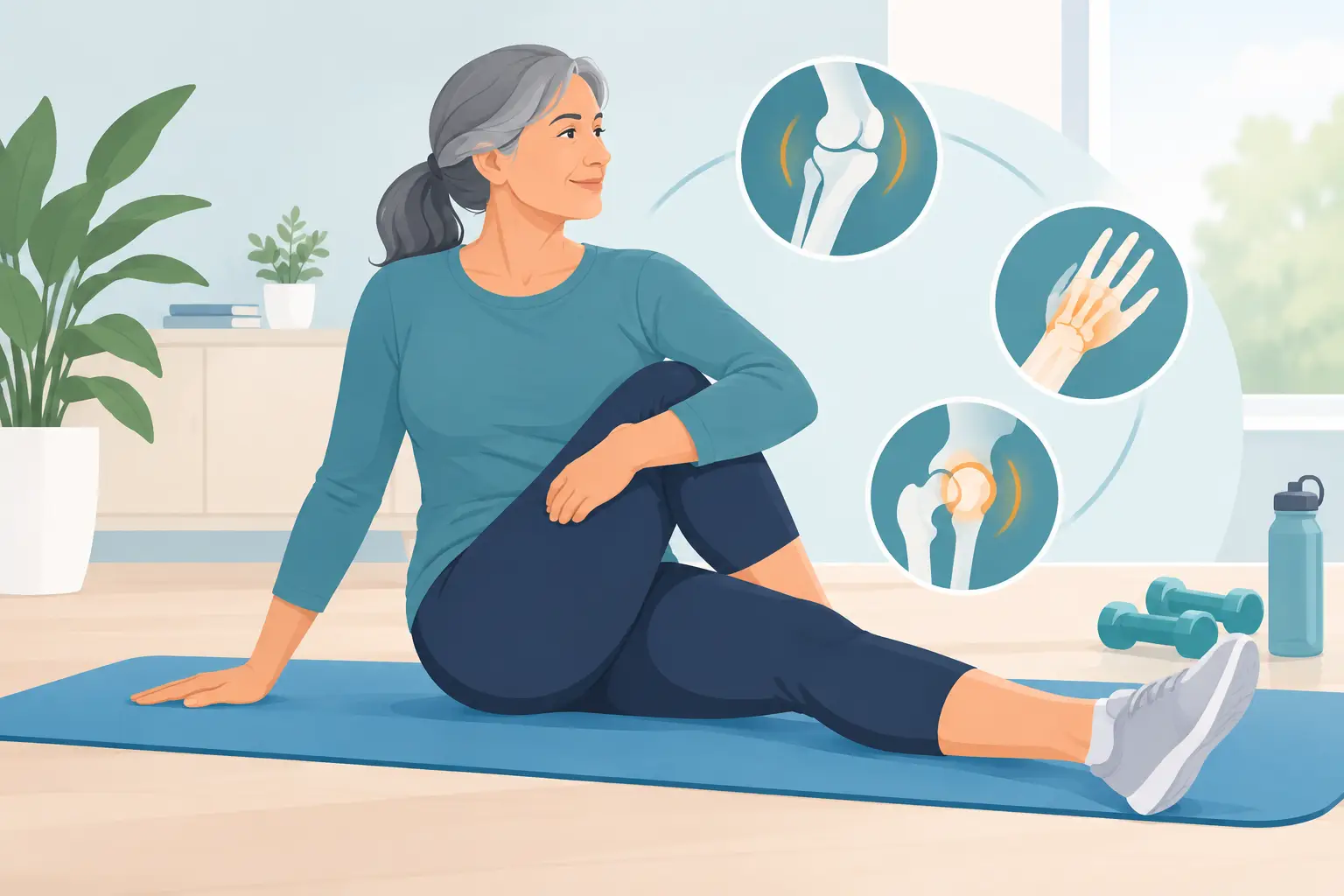
A good arthritis exercise plan should not ask you to push through a painful knee, force a stiff shoulder overhead, or leave you feeling worse the next day. It should help you move more confidently where it matters: standing up from a chair, carrying groceries, walking hills, reaching into a cabinet, and keeping up with work and family.
Arthritis can make exercise feel risky, especially if a joint has been sore for months. Yet avoiding movement usually leads to weaker muscles, less joint support and more stiffness. The goal is not to treat your body as fragile. It is to use the right amount of movement and resistance to make it more capable.
What recent research says
The evidence for exercise in osteoarthritis keeps getting stronger:
- A 2024 meta-analysis in Arthritis Care & Research found that resistance exercise programs lasting 3 to 6 months improved pain and physical function in both knee and hip osteoarthritis. The benefit did not depend on a precise dose or perfect adherence, so a realistic routine you can keep is what counts.
- A 2025 network meta-analysis in The BMJ compared exercise types for knee osteoarthritis and found aerobic exercise most likely to be the single most beneficial type for pain, function and walking, with strengthening and other exercise types also helping and no clear safety differences between them.
The practical takeaway: combine strength training with regular comfortable cardio such as walking or cycling.
Why strength helps arthritic joints
Arthritis affects joints, but the muscles around them shape how well you move. Stronger hips reduce the demand on sensitive knees. Upper-back and shoulder strength make reaching and lifting more comfortable. Better leg strength and balance make stairs and uneven sidewalks less worrying.
That does not mean heavy barbells or high-intensity classes. Training that is too aggressive, too repetitive or poorly supervised can aggravate symptoms. For many adults, low-impact resistance training is the right starting point: it builds strength without jumping, hard landings or fast direction changes.
The rules that matter
Knee osteoarthritis needs different choices than rheumatoid arthritis in the hands, for example. Still, a few principles apply broadly.
Use discomfort as information
Mild muscular effort and temporary stiffness are not automatically problems. Sharp pain, catching, instability, sudden swelling, or pain that keeps climbing during a session are signals to stop and adjust.
A useful check is the 24-hour response. If a session leaves you noticeably more sore or swollen that evening or the next morning, it was probably too much: reduce the range, resistance, repetitions or number of exercises next time. If symptoms settle quickly and you feel the same or better, that dose is likely about right.
Start with a range you can control
A partial sit-to-stand from a higher chair may be more useful than a deep squat for sensitive knees. A supported row may be a better choice than overhead pressing for an irritated shoulder. As strength and comfort improve, gradually work into a larger range.
Change one thing at a time
When an exercise feels easier, change only one variable: a few more repetitions, a little more resistance, a slightly bigger range or another set. Making everything harder in the same week makes it hard to know what caused a flare.
A joint-friendly weekly plan
For most people with stable symptoms, two or three full-body strength sessions a week is a strong foundation, with at least a day between hard sessions for the same muscles. On other days, easy walking, cycling, water exercise or gentle mobility work keeps stiffness down.
Each strength session should include a lower-body exercise, a pull, a push, and something for balance or core control. Warm up with five to 10 minutes of easy movement, stop most sets with a few good repetitions left, and finish with a short walk or relaxed mobility if it feels good.
Exercises that often work well
- Sit-to-stands or box squats build leg strength for chairs and stairs. Adjust chair height and use support as needed.
- Supported rows strengthen the upper back with little demand on wrists or shoulders.
- Incline or wall push-ups build pushing strength with less load than floor push-ups.
- Glute bridges and hip hinges strengthen the hips and take pressure off the knees.
- Low step-ups build confidence on stairs. Keep the step low enough to move without limping.
- Supported balance work, such as standing on one leg while holding a counter, maintains stability for walking.
Hand position, foot placement, tempo and support can completely change how a movement feels. A skilled coach can modify an exercise without making the workout feel watered down.
What to do during a flare-up
A flare-up is not necessarily a reason to stop moving; complete rest can increase stiffness. Ask instead what you can do today without making symptoms worse. Choose a shorter walk, gentle range-of-motion work, light cycling, or easier versions of your usual exercises, and finish feeling more mobile, not drained.
If a joint is hot, visibly swollen, newly unstable or painful for no clear reason, check with your physician or physiotherapist before training it. People with inflammatory arthritis may also need their plan adjusted around disease activity and medication changes.
Why supervision changes the outcome
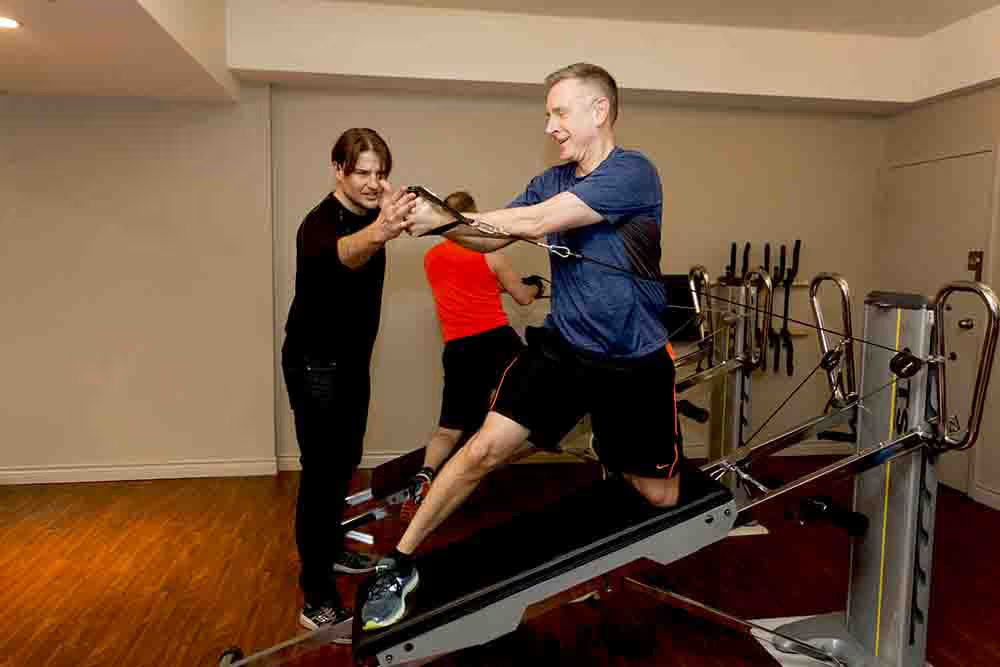
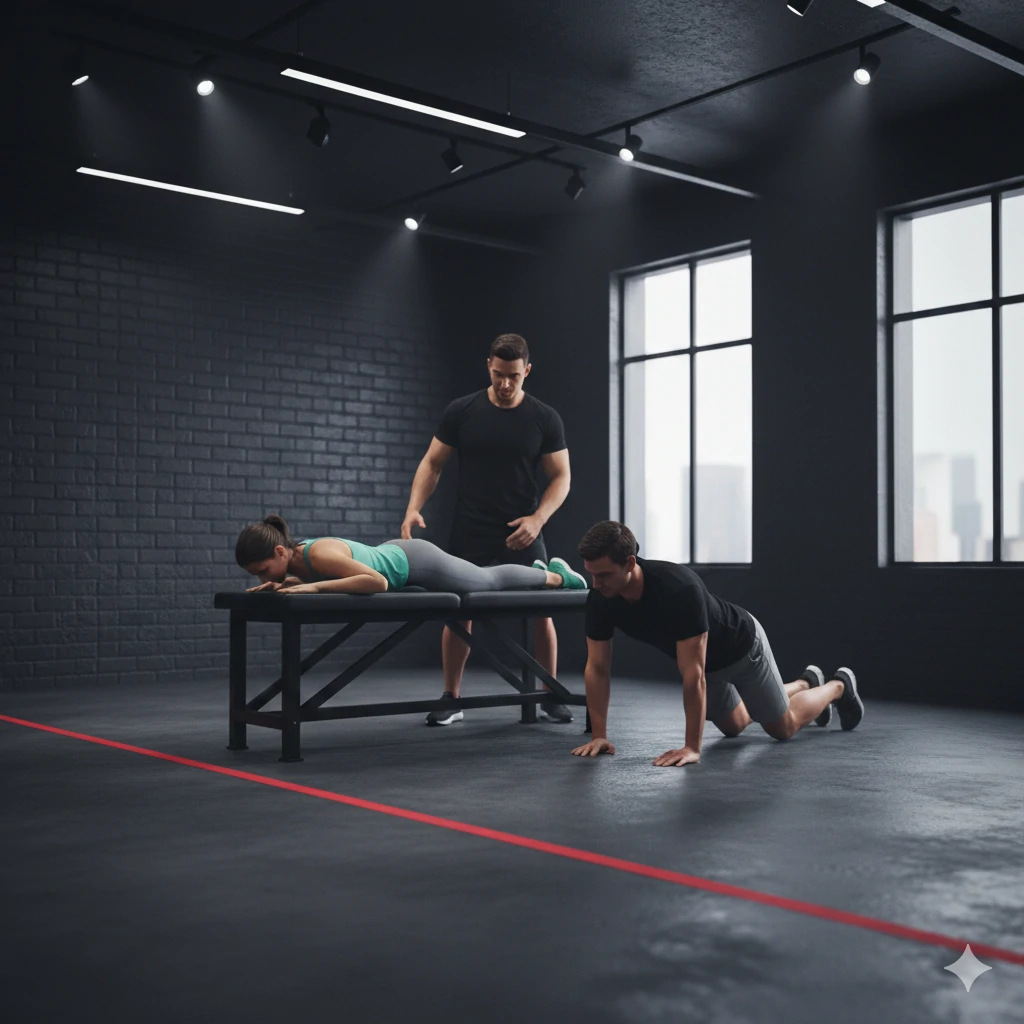
Many people with arthritis tried exercise once and decided it does not work for them. Often the program moved too fast, used poorly matched exercises, or had no way to adapt when symptoms changed. Individual coaching fixes that: your coach watches how you stand, squat, reach and shift weight, then picks positions you can train in comfortably.
At TSquared, the Gravity Training System provides adjustable bodyweight resistance with low impact, so you can progress strength without pounding your joints. See our knee pain strength program, hip pain and mobility program, or low-impact personal training. Your first session is free.
Sources
- Are the effects of resistance exercise on pain and function in knee and hip osteoarthritis dependent on exercise volume, duration, and adherence? Arthritis Care & Research, 2024
- Comparative efficacy and safety of exercise modalities in knee osteoarthritis: systematic review and network meta-analysis. The BMJ, 2025