
Posture & Desk Worker Strength Training in Vancouver
Professional strength training designed specifically for office workers to fix forward head posture, eliminate tech neck pain, and build the postural strength that desk ergonomics alone cannot provide. Located at 128 W Pender St #102 in downtown Vancouver.
Real Results from Vancouver Adults 40+
Personal Training Reviews from Google | 97 Reviews 4.9 Avg Rating
Reverse Years of Desk Work Damage with Strength Based Posture Training
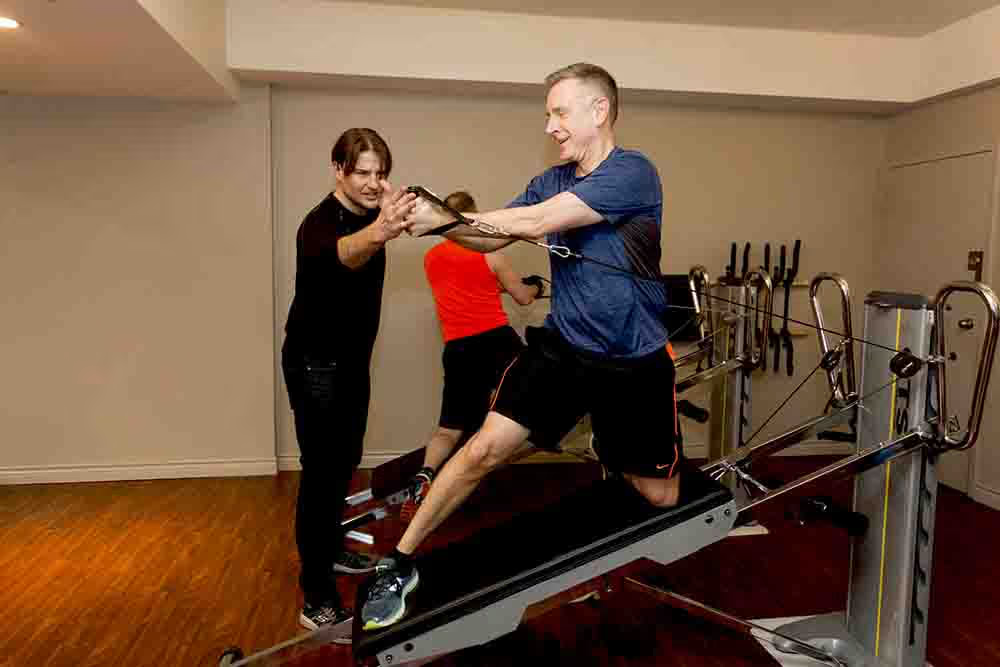
Stretching and ergonomic adjustments provide temporary relief. Building actual postural strength creates lasting change. TSquared's Posture & Desk Worker Program uses specialized Gravity Training equipment to strengthen the stabilizer muscles that support proper alignment, reducing forward head posture, rounded shoulders, and chronic upper back tension common in Vancouver's office workers. Most clients notice reduced afternoon fatigue and better body awareness during work hours within 2-3 weeks.
Why Desk Workers Need Strength Training Not Just Stretching
Ergonomics Optimizes Your Setup But Does Not Build Strength
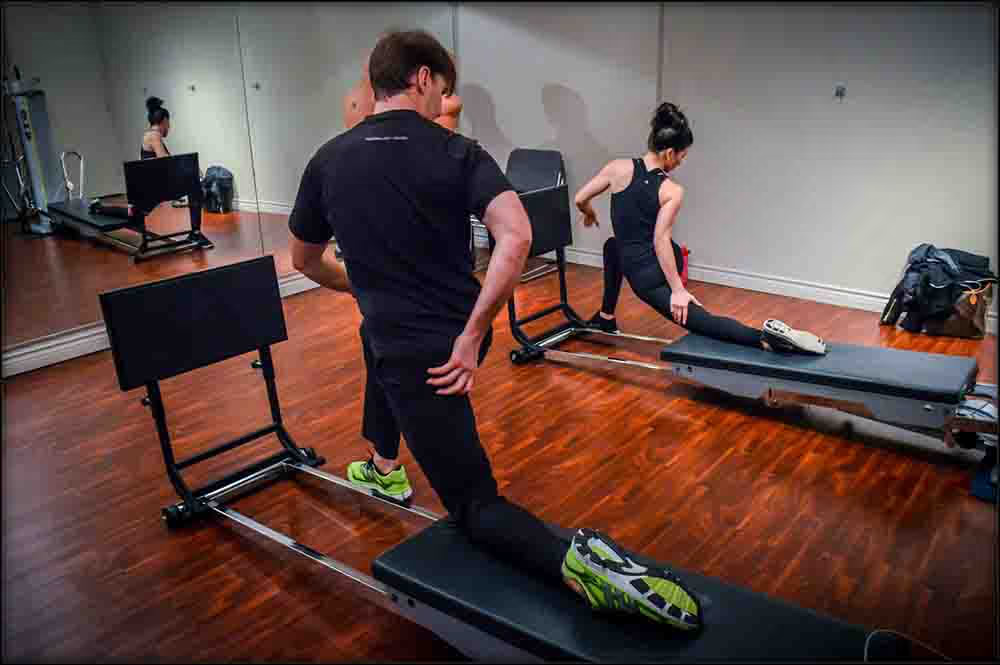
Your ergonomic assessment ensures proper monitor height and chair support. However, weak postural muscles still fatigue within hours, causing you to slouch despite perfect workspace setup. Strength training builds the muscular endurance needed to maintain good posture throughout 8-hour workdays without constant conscious effort.
Stretching Provides Relief But Does Not Prevent Problems
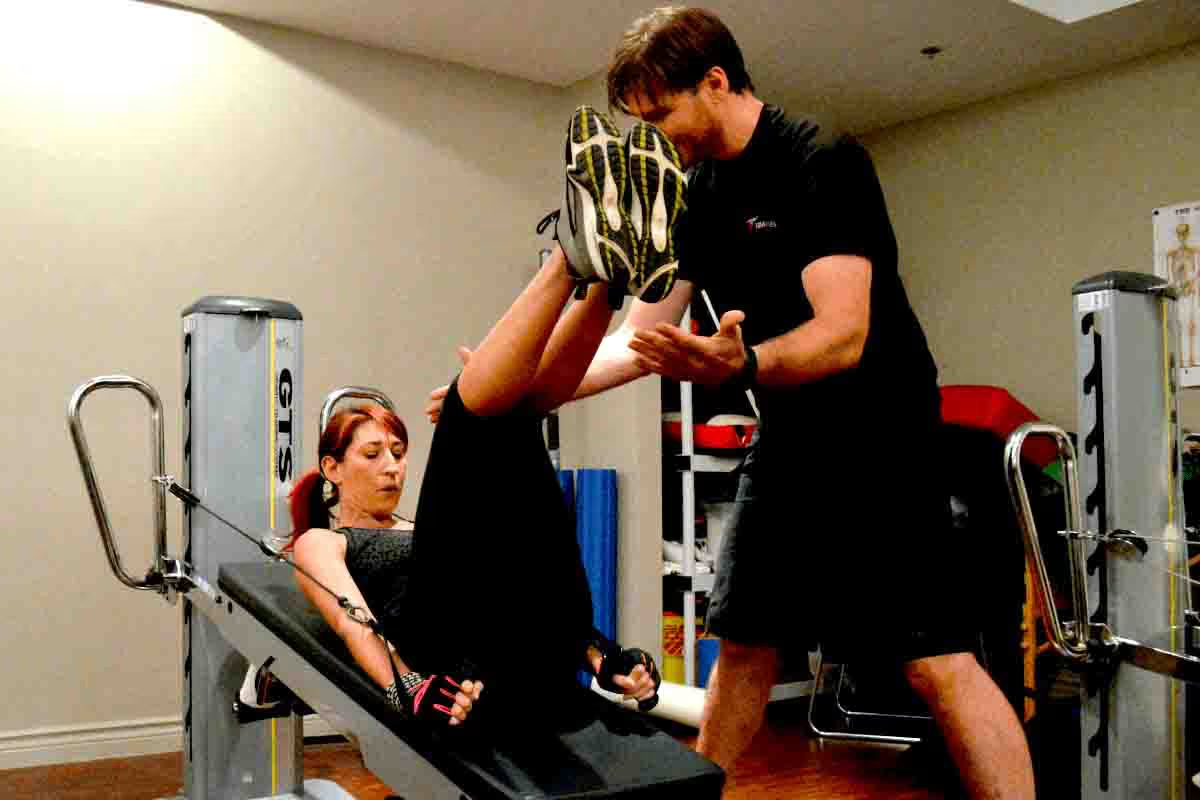
Rolling out your neck and shoulders feels great temporarily. The relief fades within hours because stretching does not address the root cause: muscle weakness and imbalance. Your body defaults back to slouched posture because weak muscles cannot hold proper alignment. Strengthening those muscles creates sustainable change.
Massage Treats Symptoms But Does Not Build Resilience
Regular massage therapy releases tension and reduces pain. Without strengthening work, the same movement patterns and muscle imbalances recreate the problem. Combining massage with targeted strength training addresses both immediate discomfort and long-term prevention by building the muscular foundation that prevents chronic tension from developing.
The Downtown Office Worker Reality Tech Neck and Forward Head Posture
Vancouver office workers at TD Tower, Royal Centre, HSBC Building, and The Post spend an average 9 hours daily looking at screens. Research shows that for every inch your head moves forward from proper alignment, your neck muscles support an additional 10 pounds of pressure. Most desk workers carry their head 2-3 inches forward, creating 20-30 pounds of constant strain on neck and upper back muscles.
This forward head posture, commonly called tech neck, develops gradually over months and years of desk work. Your body adapts to sustained positions: chest muscles tighten and shorten while upper back muscles weaken and overstretch. Simple tasks like checking blind spots while driving or looking up at street signs become uncomfortable. You experience afternoon headaches, shoulder tension that worsens as the day progresses, and difficulty finding comfortable sleeping positions.
The Gravity Training System at TSquared addresses these specific imbalances. The equipment provides constant, controlled resistance that strengthens scapular stabilizers and deep neck flexors while allowing safe progression without joint stress. Unlike traditional gym equipment designed for young athletes, Gravity Training accommodates the joint concerns and movement restrictions common in adults over 40 who spend most waking hours at desks.
How the Posture and Desk Worker Program Works
Week 1-2 Movement Assessment and Foundation Building
Troy evaluates your current posture, identifies specific muscle imbalances, and tests range of motion in shoulders, thoracic spine, and neck. He observes how you naturally hold your head and shoulders, notes asymmetries, and asks about your daily work setup and pain patterns. Your first sessions focus on re-educating deep postural muscles and establishing proper movement patterns before adding resistance.
Week 3-4 Progressive Resistance and Scapular Strengthening
You begin targeted strengthening exercises for rhomboids, middle trapezius, and serratus anterior muscles that pull shoulders back and down. The Gravity System provides accommodating resistance that challenges muscles throughout their full range without excessive joint compression. Troy adjusts resistance levels session by session based on your form quality and recovery between workouts.
Week 5-8 Core Integration and Postural Endurance
Training progresses to exercises that integrate core stability with upper body positioning. You practice maintaining neutral spine and proper head alignment while performing reaching, lifting, and rotational movements that mirror daily activities. Sessions emphasize muscular endurance with moderate resistance and higher repetitions to build the stamina needed for 8-hour work days.
Week 9-12 Habit Formation and Long Term Maintenance
By week 9, improved posture becomes more automatic. You notice yourself naturally sitting taller, catching and correcting slouched positions quickly, and experiencing less afternoon fatigue. Training focuses on maintaining your gains, addressing any remaining imbalances, and establishing a sustainable 2-3 sessions per week routine that prevents regression back to old postural patterns.
Specific Office Worker Problems This Program Addresses
Forward Head Posture and Tech Neck
Your head projects forward beyond your shoulders, creating constant strain on posterior neck muscles. This posture develops from hours looking down at laptops, phones, and documents. The program specifically strengthens deep neck flexors and upper thoracic extensors while releasing tight anterior neck and chest muscles. Most clients see visible improvement in head position within 3-4 weeks.
Rounded Shoulders and Upper Back Pain
Your shoulders roll forward and inward from keyboard and mouse work, creating a rounded upper back appearance. This position stretches and weakens scapular stabilizers while tightening chest muscles. Training emphasizes scapular retraction and depression exercises that pull shoulders back and down, correcting the muscle imbalance and reducing the burning sensation between shoulder blades common after long desk sessions.
Lower Back Pain from Core Weakness
Prolonged sitting weakens deep core stabilizers and hip flexors, forcing your lower back to compensate for poor spinal support. This creates aching pain that worsens throughout the day and difficulty transitioning from sitting to standing. The program builds core endurance through anti-rotation and anti-extension exercises that teach your trunk to maintain neutral spine positioning during daily activities and long sitting periods.
Tension Headaches from Neck Strain
Chronic neck muscle tension from forward head posture triggers tension-type headaches that typically start in late afternoon or evening. The pain often begins at the base of the skull and radiates forward toward temples and eyes. Strengthening neck stabilizers and improving head position reduces this constant muscle tension, with most clients reporting fewer or less severe headaches within 2-3 weeks of consistent training.
Afternoon Energy Crashes and Fatigue
Poor posture requires constant low-level muscle contraction to prevent complete collapse, creating significant energy drain throughout the day. Your body fatigues from fighting gravity in mechanically disadvantaged positions. As postural muscles strengthen and alignment improves, maintaining good posture becomes less effortful. Clients consistently report feeling more energetic during afternoon hours and less exhausted after work days.
Why Gravity Training System Works for Desk Workers Over 40
The Gravity Training System differs fundamentally from traditional gym equipment. Standard machines and free weights load your joints with compressive forces that can aggravate existing wear and tear common in adults over 40. Gravity Training uses body weight and controlled eccentric resistance to challenge muscles while minimizing joint stress.
This equipment specifically targets the smaller stabilizer muscles responsible for postural control. Traditional gym exercises like bench press and lat pulldowns work large prime movers but often neglect the deep muscles that hold your shoulder blades stable and your spine aligned. Gravity Training isolates these postural muscles, forcing them to work independently and building the foundation that supports proper alignment.
The system accommodates individual limitations and past injuries that make conventional exercises problematic. If you cannot perform standard rows due to shoulder impingement or cannot do planks because of wrist issues, Troy modifies exercises using the Gravity System to work around restrictions while still strengthening the target muscles. This flexibility makes it particularly effective for desk workers who often have multiple areas of concern.
Most importantly, the proprioceptive feedback from Gravity Training helps retrain your brain's awareness of proper positioning. The equipment provides constant tactile cues about shoulder blade placement and spinal alignment, improving your ability to recognize and maintain good posture automatically throughout your workday without conscious effort.
Who This Program Serves Best
Downtown Office Workers
You work at a downtown Vancouver office tower and want training that fits around your schedule. You can attend sessions before work, during lunch breaks, or after work without adding significant commute time to your day.
Tech and Finance Professionals
You spend 8 plus hours daily at computer screens in roles like software development, accounting, financial analysis, legal work, or project management. Your job requires sustained focus and limited movement, creating the perfect conditions for postural deterioration and chronic tension.
Adults Over 40 with Joint Concerns
You want to improve posture but previous attempts at traditional strength training aggravated shoulder, neck, or lower back issues. You need an approach that builds strength without excessive joint loading or movements that trigger pain flare-ups common in adults with degenerative changes.
Remote Workers and Hybrid Employees
You work from home part or full time in less than ideal ergonomic setups. You lack the social interaction and accountability of office environments. Small group training provides structure, community, and the in-person coaching difficult to replicate through online fitness programs or solo gym workouts.
Additional Ideal Candidates
People experiencing chronic afternoon headaches from neck tension who have tried massage and chiropractic with only temporary relief. Individuals who notice their posture deteriorating despite ergonomic desk setups and conscious efforts to sit properly. Professionals dealing with reduced concentration and productivity from constant discomfort and postural fatigue. Office workers who previously exercised regularly but stopped due to gym intimidation, lack of time, or uncertainty about safe exercise selection with existing pain. Adults transitioning back to fitness after years of inactivity who need gradual, supervised progression rather than high-intensity group classes or generic gym programs.
The Small Group Training Advantage for Desk Workers
TSquared caps classes at 5 participants maximum, providing individual attention impossible in large group fitness classes while maintaining affordability compared to private personal training. Most Vancouver personal trainers charge 100 to 180 dollars per hour for one-on-one sessions. TSquared's small group training costs 40 dollars per session with a 10-session package, or 50 dollars for a single session, while delivering comparable personalized coaching and program customization.
This small group size allows Troy to watch each person's form continuously, correct technique immediately, and modify exercises for individual needs and limitations. When you struggle with a particular movement or experience discomfort, he adjusts your positioning or substitutes alternative exercises on the spot. This level of attention simply does not exist in bootcamp-style classes with 15 to 30 participants where instructors demonstrate exercises but cannot provide individual form correction or program modifications.
The consistent small group creates accountability and community particularly valuable for remote workers and individuals combating the Vancouver Freeze. You train with the same people regularly, building relationships with others who share similar fitness goals and work situations. This social element transforms exercise from another isolated task into a highlight of your week, dramatically improving long-term adherence compared to solo gym workouts or anonymous large group classes.
Most clients attend 2 to 3 sessions weekly for optimal results without overwhelming their schedules. At 40 dollars per session on a 10-session package, this investment of roughly 320 to 480 dollars monthly compares to 800 to 1200 dollars for equivalent private training frequency. For busy professionals, this combination of effectiveness, affordability, and community makes small group training the most sustainable approach to building and maintaining postural strength long-term.
How TSquared Posture Program Compares to Other Solutions
Frequently Asked Questions About Posture Training for Desk Workers
How quickly will I notice improvement in my posture and pain levels?
Most clients notice reduced afternoon tension and better body awareness within 2 to 3 weeks of attending twice weekly sessions. Visible posture changes typically appear between weeks 4 to 6 as muscle strength builds and movement patterns improve. Significant lasting changes usually require 8 to 12 weeks of consistent training. Your timeline depends on severity of existing imbalances, training frequency, and adherence to form cues during sessions.
Can this program help if I already have chronic neck or back pain?
The program helps many people with chronic postural pain, but you should consult your healthcare provider before starting any new exercise program if experiencing significant or worsening pain. Troy modifies exercises around existing limitations and injuries. The Gravity Training System's accommodating resistance allows safe strengthening even with movement restrictions. If your pain stems from structural issues like herniated discs or nerve compression, you need medical clearance before beginning strength training.
What makes this different from YouTube stretching videos I can do at my desk?
Desk stretches provide temporary relief but do not address the underlying muscle weakness causing poor posture. This program builds actual strength in postural muscles through progressive resistance training impossible to achieve with bodyweight stretches alone. Troy provides immediate form feedback and exercise modifications you cannot get from videos. The small group accountability and scheduled sessions create consistency difficult to maintain with solo desk stretching routines.
How does the schedule work for downtown office workers with unpredictable hours?
Classes run throughout the day with options before work starting at 6:30 AM, midday sessions at 12:00 PM and 1:00 PM convenient for lunch breaks, and after-work times between 5:00 PM and 7:00 PM. You book specific time slots for the week ahead, choosing sessions that fit your schedule. If work emergencies arise, you can reschedule to different time slots within the same week with 12-hour advance notice. This flexibility accommodates the reality of downtown professional schedules.
What equipment or clothing do I need for sessions?
Wear comfortable athletic clothing that allows free shoulder and hip movement. Most clients change from work clothes in the private changing area before sessions. You need athletic shoes with flat, stable soles. The studio provides all training equipment including the Gravity Training System, resistance bands, and foam rollers. Bring a water bottle. No special gear purchases required. Many downtown office workers keep a gym bag at their desk or in their car with training clothes for convenience.
Will training 2 to 3 times weekly be enough to see results with my severe forward head posture?
Two to three weekly sessions provides sufficient stimulus for strength building and postural improvement in most cases. Consistency matters more than frequency. Adults with severe postural deviations often see better results than those with mild issues because the margin for improvement is larger. You also need to implement basic positional awareness strategies at your desk between sessions. Troy teaches simple self-checks and micro-corrections you can use throughout your workday to reinforce training adaptations.
Is this program suitable if I have never strength trained before?
The program works exceptionally well for complete beginners because you learn proper movement patterns from the start without bad habits to unlearn. Troy starts everyone at appropriate intensity regardless of experience level. The Gravity Training System provides more intuitive feedback than traditional gym equipment, making it easier to understand correct positioning. Small group size ensures you receive adequate coaching attention during your learning phase. Most current clients had zero strength training experience when they started.
Can I combine this program with my current massage therapy or physiotherapy?
Combining strength training with massage or physiotherapy often produces better results than either approach alone. Massage releases acute tension while strength training prevents it from returning. Physiotherapy addresses injury and dysfunction while this program builds the foundation that prevents future problems. Many clients work with massage therapists or physiotherapists concurrently. Troy can coordinate with your other healthcare providers to ensure complementary treatment approaches and avoid exercise contraindications if you have specific restrictions.
What to Expect in Your First Session
Your first session begins with a brief intake conversation covering your desk work setup, current pain or discomfort patterns, past injuries or movement restrictions, and specific goals for the program. This takes 5 to 10 minutes before the group training session starts. Troy needs to understand your individual situation to provide appropriate modifications and exercise progressions.
He then observes your natural standing and seated posture, noting head position relative to shoulders, shoulder blade positioning, thoracic spine curvature, and any visible asymmetries. You perform simple movement assessments like shoulder flexion, thoracic rotation, and neck range of motion so Troy can identify specific mobility restrictions and muscle imbalances requiring attention.
The first workout focuses on learning proper positioning on the Gravity Training System rather than heavy resistance or high intensity. Troy demonstrates each exercise, explains which muscles should be working, and describes what you should feel. He sets your Gravity System resistance at conservative levels appropriate for learning movement patterns without excessive fatigue.
During the session, he circulates between the 5 or fewer participants, watching your form, correcting positioning, and providing feedback on muscle engagement. He adjusts resistance or modifies exercises if something causes discomfort beyond normal training sensation. First sessions are deliberately less intense than ongoing training to prevent excessive soreness that might discourage continuation.
The session concludes with gentle mobility work for areas you targeted during strength exercises. Troy provides guidance on what to expect for soreness levels and recovery between sessions. He asks you to pay attention to your posture at work over the next few days, noting when you catch yourself slouching and whether correct positioning feels easier to maintain after just one session.
Convenient Downtown Location and Flexible Scheduling
TSquared Personal Training
128 W Pender St #102 Vancouver, BC V6B 1R8
Phone: (604) 250-9784
TSquared operates from 128 W Pender St #102, inside The Sun Tower, in downtown Vancouver. The studio is a short walk from most downtown Vancouver offices.
This central location makes training accessible during lunch breaks without requiring lengthy travel time. Most clients walk from their offices, complete their session, and return to work within their hour lunch window. The studio is 3 blocks from Burrard SkyTrain station and 4 blocks from Vancouver City Centre station for those commuting from other areas.
Classes run six days weekly Monday through Saturday with morning sessions starting at 6:30 AM for early risers, midday options at 12:00 PM and 1:00 PM for lunch training, and evening sessions between 5:00 PM and 7:00 PM for after-work attendance. This schedule accommodates various office worker routines and commute patterns common in downtown Vancouver.
You book sessions through the online scheduling system, selecting specific time slots that work with your weekly calendar. The system shows current class capacity, allowing you to choose less crowded sessions if you prefer smaller groups. You can book single sessions or reserve your regular weekly time slots in advance to maintain schedule consistency.
Transparent Pricing and What You Actually Get
TSquared keeps small group pricing simple. A single session costs 50 dollars. A 10-session package costs 400 dollars, bringing the per-session rate down to 40 dollars.
Most clients attend twice weekly, making the monthly investment approximately 320 to 400 dollars on the 10-session package. This compares to 800 to 1200 dollars monthly for twice weekly private personal training at Vancouver's typical 100 to 150 dollar per hour rates. You receive comparable individual attention, customized programming, and form correction at a fraction of the cost through the small group format.
What this investment includes: personalized movement assessment and postural evaluation at your first session, customized exercise programming adjusted based on your progress and limitations, immediate form correction and exercise modifications during every session, access to specialized Gravity Training equipment not available in standard gyms, consistent small group accountability with maximum 5 participants per class, and ongoing program adjustments as your strength and posture improve.
Session packages do not expire, allowing you to use them at whatever pace fits your schedule. If you travel frequently for work or need to pause training temporarily, your remaining sessions remain available when you return. Most clients purchase initial 10-session packages to evaluate program fit, then transition to 20 or 30 session packages for better per-session pricing once committed to regular attendance.
Getting Started with Posture Training
Book Your First Session Free
Your first session at TSquared is complimentary, allowing you to experience the training approach, meet Troy, and determine if small group format suits your needs before committing financially. No credit card required to book your trial session. Simply select an available time slot and attend.
Call or Text for Questions
If you want to discuss specific concerns or limitations before booking, call or text Troy directly at 604-250-9784. He responds to messages within a few hours during business days and can answer questions about program suitability for your situation, schedule options, and training approach.
Convenient Downtown Access
Located at 128 W Pender St #102, inside The Sun Tower. A short walk from most downtown Vancouver offices, with easy access to SkyTrain. Accessible during lunch breaks or before and after work without significant commute additions to your day.
Ready to fix forward head posture and eliminate chronic desk worker tension? Book your free first session at TSquared Vancouver Personal Training. Call or text Troy at 604-250-9784 or visit the studio at 128 W Pender St #102.