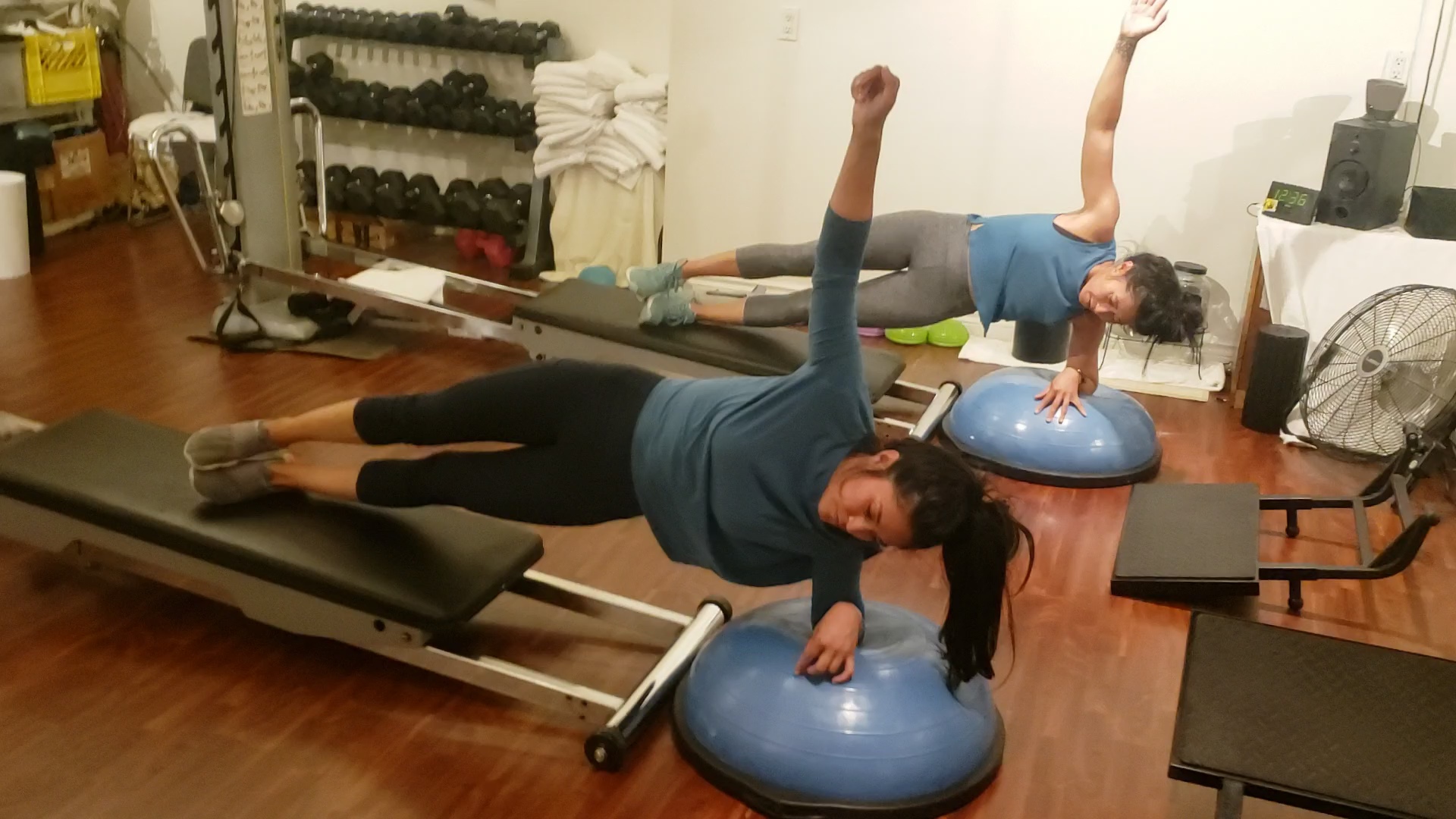

A strong core does more than look good. It's the foundation that lets you bend, lift, twist and carry without your lower back taking the strain. For people recovering from back pain or returning to exercise after an injury, building core strength safely is one of the most useful things you can do. Gravity Training offers a low-impact way to do it.
This guide explains what the research says about core training for back pain, how the Gravity Training System works, and how we use it for recovery at TSquared in downtown Vancouver.
What the Research Says About Core Training
Core training has strong evidence behind it for chronic low back pain. A 2025 systematic review and meta-analysis in Frontiers in Physiology pooled 57 randomized controlled trials with 7,705 people with chronic non-specific low back pain. It found that all three types of core training studied, Pilates, core stability training and core resistance training, reduced pain more than control conditions. Core resistance training showed the largest improvement in day-to-day function, and Pilates showed the largest reduction in pain, although the differences between the three types were not statistically significant.
The authors described core training as a safe, effective, evidence-based option that doesn't rely on medication, and noted that training frequency mattered: people who trained more often tended to improve more.
The practical takeaway is that the best type of core training is the one you can do consistently, at the right level, with good form.
What Is the Gravity Training System?
The Gravity Training System is a gliding platform on an adjustable incline. You use your own body weight as resistance, and the steeper the incline, the more of your body weight you lift. This gives a few useful features for recovery:
- Adjustable load: resistance can start very low and increase in small steps as you get stronger.
- Low impact: there's no jumping or pounding, and no heavy bar loading the spine.
- Supported positions: many exercises are done lying or kneeling on the glideboard, which takes pressure off sensitive joints while the core works to control the movement.
- Full-body work: nearly every exercise asks the core to stabilize while the arms or legs move, which builds the kind of control you need in daily life.
How Gravity Training Supports Recovery
Recovering from back pain or an injury usually means finding the right balance: enough load to build strength, not so much that symptoms flare. Gravity Training helps with that balance because resistance can be fine-tuned for each exercise and each day.
A typical recovery-focused progression looks like this:
- Control first: learning to brace and breathe while moving slowly at low resistance.
- Build endurance: holding good positions for longer and adding repetitions.
- Add load: raising the incline gradually as strength improves.
- Transfer to daily life: adding movements like reaching, rotating and lifting that mirror what you do at home and work.
Progress depends on how your body responds, not a fixed calendar. Troy checks in at the start of each session and adjusts exercises on harder days.
Who This Approach Helps
- People with recurring or chronic low back pain
- People who have finished physiotherapy and want to keep building strength
- Desk workers dealing with posture-related neck and back tension
- Adults returning to exercise after surgery or a long break
One client, Cris Ortega, described it this way in a Google review: "The gravity training is high intensity but low impact." Cris had been dealing with a lower back injury that kept causing trouble during solo workouts.
If you have significant or worsening pain, numbness, or a recent injury or surgery, check with your doctor or physiotherapist before starting a new program.
Training at TSquared
Sessions at TSquared are coached in small groups of no more than 4 people, or one-on-one if you prefer. That small size lets Troy watch your form closely and modify exercises around your injury history.
- Small group: $40 per session on a 10-session package, or $50 for a single session
- Private 1-on-1: $90 per session on a 10-session package, or $120 for a single session
- Location: 128 W Pender St #102, inside The Sun Tower, steps from Stadium-Chinatown SkyTrain Station
- First session: free, with no credit card needed to book
Frequently Asked Questions
Is Gravity Training safe with back pain?
For most people with non-specific back pain, gradual, well-coached core training is safe and helpful, and the 2025 review supports core training as a safe option. Resistance starts low and is adjusted to how your back responds. If your pain is severe, worsening or comes with numbness or weakness, get medical advice first.
How often should I do core training for back pain?
Two to three sessions a week is a good target. The 2025 review found that training more often was linked to bigger improvements with core resistance training.
Is Gravity Training the same as Pilates?
They share some ideas, such as controlled movement and core engagement on a gliding platform, but Gravity Training uses your body weight on an incline rather than springs. Our comparison article explains the differences.
Start Building a Stronger Core
Book your free first session, or call or text Troy at (604) 250-9784 to talk about your recovery goals.
Sources
- Effects of different types of core training on pain and functional status in patients with chronic nonspecific low back pain: a systematic review and meta-analysis. Frontiers in Physiology, 2025.