What Actually Happens to Your Body After 40
Strength training advice doesn't change because you turn 40. Your physiology does, and the training has to follow it.
According to Canadian exercise guidelines for older adults, adults lose an estimated 3 to 8 percent of muscle mass per decade after age 30, and that rate accelerates after 60 without resistance training to counter it. Bone density follows a similar decline. Tendons and ligaments lose elasticity, which means the same movement that felt fine at 25 can now leave you stiff for two days.
None of this means you should train less. It means you need to train differently.
Why Generic Strength Programs Fail Aging Bodies
Most gym programming, and most trainers, still default to templates built for people in their twenties: high-impact circuits, heavy barbell work with minimal progression, and back-to-back classes with no attention to individual recovery capacity.
Applied to an aging body, that approach does two things badly. It loads joints and connective tissue faster than they can adapt, and it assumes a recovery speed that simply isn't there anymore. The result is the pattern we see constantly: someone starts strong, gets a nagging injury within a few weeks, and quietly stops training altogether.
What Effective Strength Training for Aging Adults Looks Like
The physiology above points to a specific set of training principles, not a specific workout:
- Progressive, not aggressive, overload. Load should increase in small, controlled steps so tendons and connective tissue can keep pace with muscle adaptation, which happens faster.
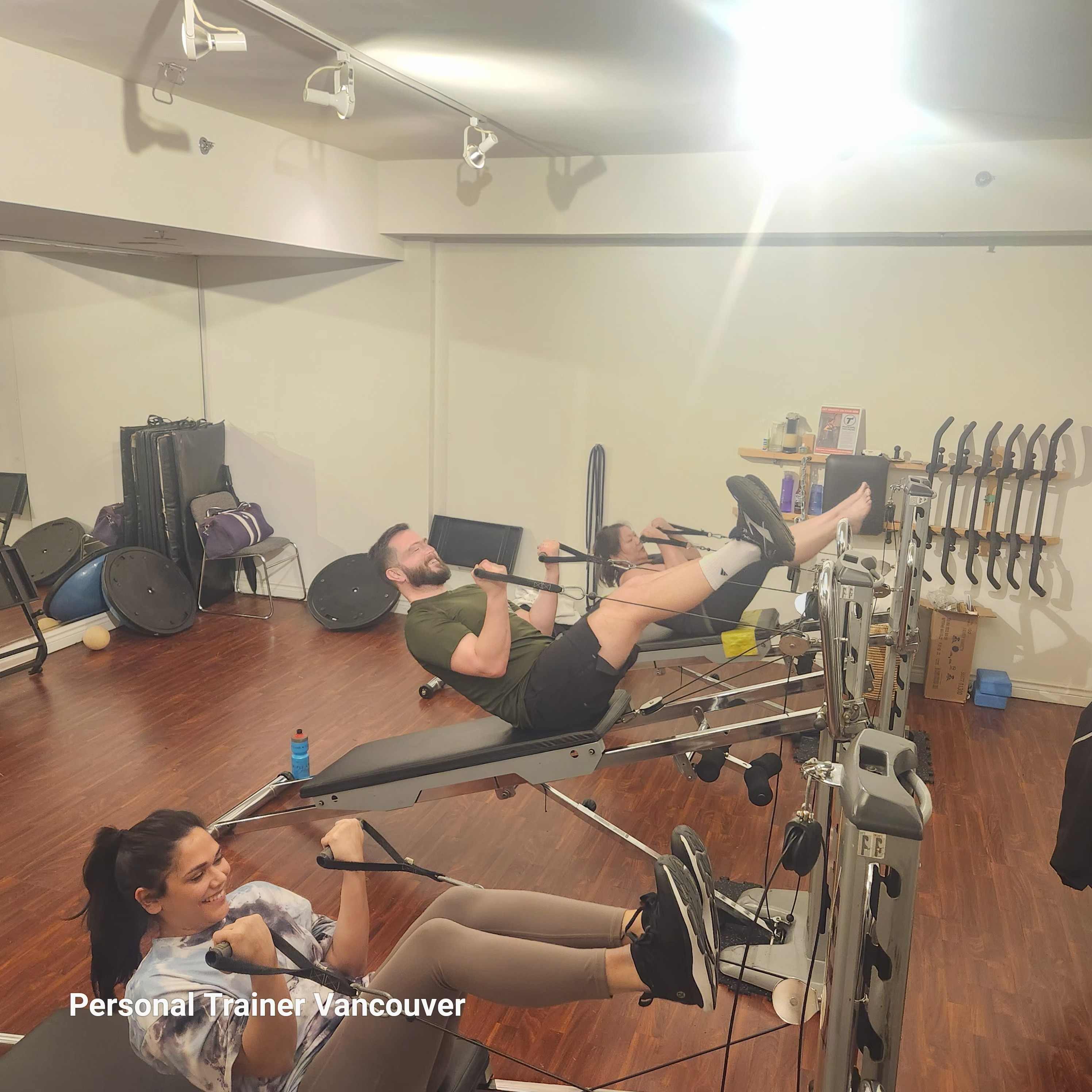
- Constant, controlled resistance over ballistic movement. Smooth, controlled loading builds strength with far less joint compression than jumping, heavy dropped weights, or jerky barbell movements.
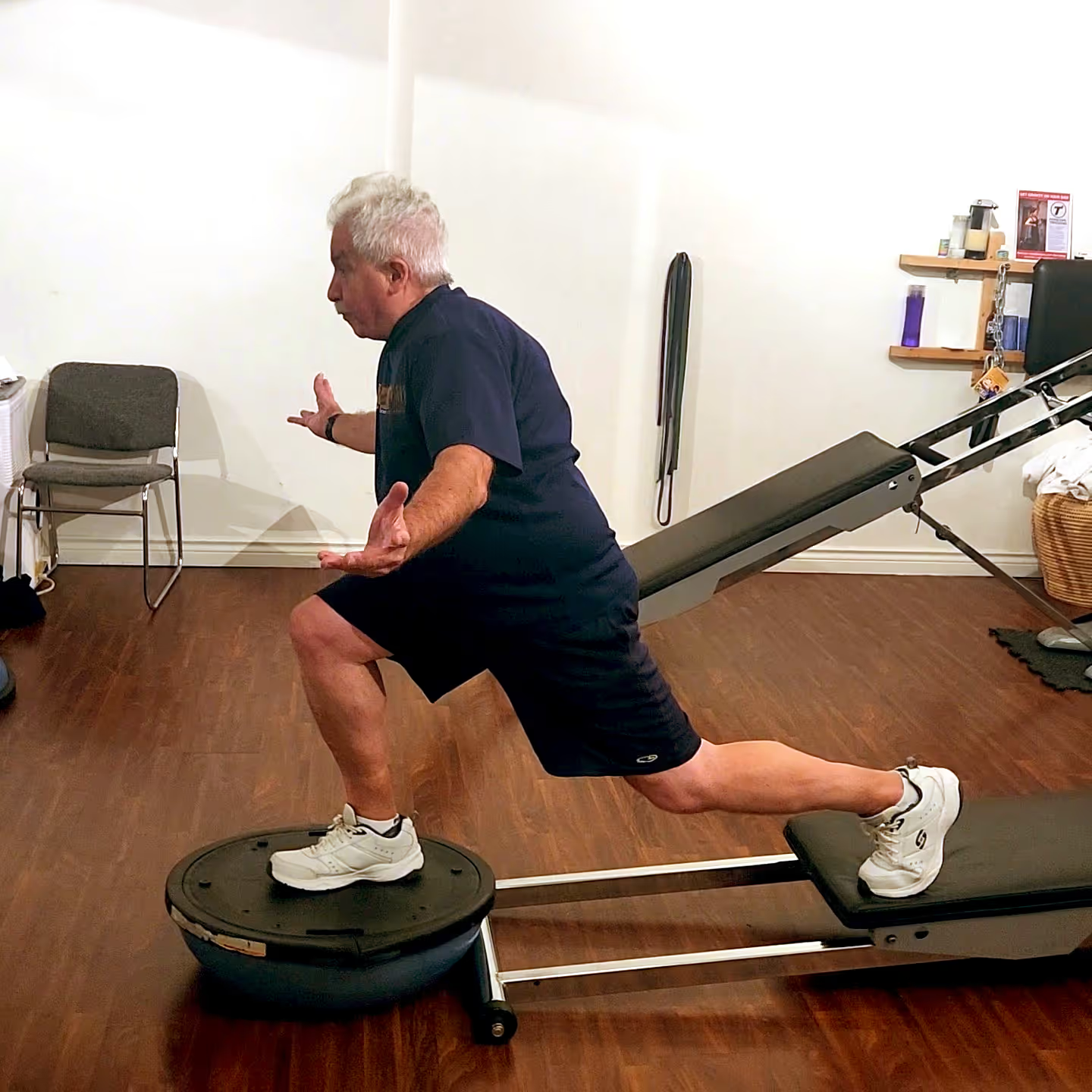
- Multi-plane movement. Real-life strength isn't just up and down. Training that includes rotation and lateral movement protects joints and translates better to daily function.
- Recovery-informed frequency. Two to three well-structured sessions a week, with adequate recovery between them, consistently outperforms daily high-intensity training for adults over 40.
How Often and How Hard Should You Train After 40
Most adults over 40 do well with two to three strength sessions per week, each targeting the full body rather than splitting muscle groups across more frequent, shorter sessions. Intensity should feel challenging on the last few repetitions of a set, not maximal on every set. The goal is consistent, accumulating progress over months, not a personal record every session.
Signs Your Current Training Isn't Built for Your Age
- You're regularly sore for more than two days after a session
- You've had the same joint flare up more than once in the last year
- Your trainer or class hasn't adjusted your program since you started
- You feel like you have to "push through" pain to keep up
- You've stopped and restarted your fitness routine multiple times
Any one of these is a sign the program is working against your physiology instead of with it.
Building a Sustainable Strength Training Routine as You Age
The adults who stay strong into their 50s, 60s, and beyond aren't the ones who trained the hardest in any single year. They're the ones who built a routine their body could sustain for the next twenty years, not just the next twenty weeks.
That's the entire premise behind how we coach adults over 40 at TSquared: joint-friendly resistance, careful progression, and programming built around what your body needs now, not what worked for you at 25.