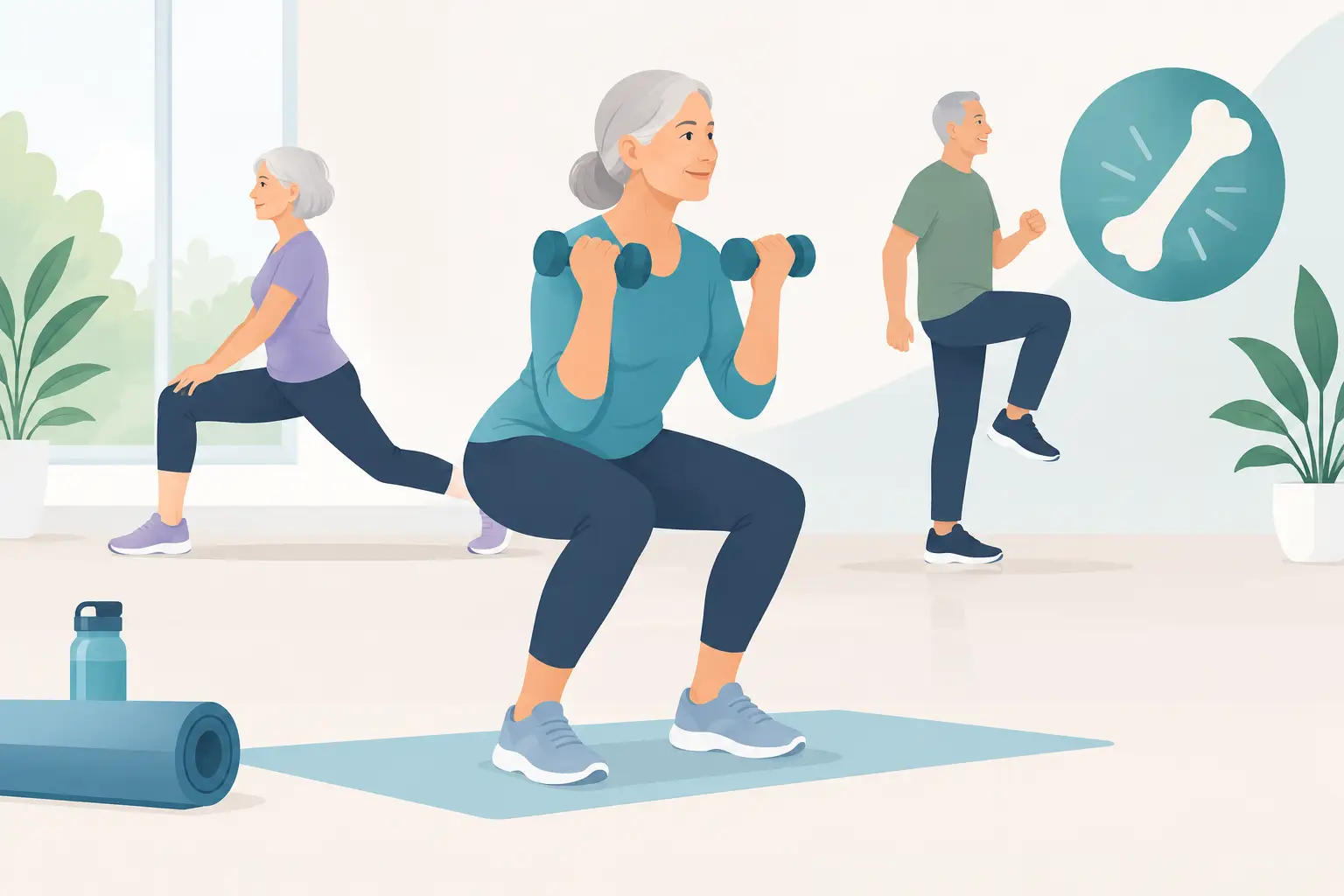
A useful menopause training plan should not start with a list of things you can no longer do. It should start with what your body needs now: enough strength to support your joints, enough mobility to move comfortably, and a plan that respects changing energy, recovery and symptoms.
Menopause is not a reason to stop training or accept a steady loss of strength. It is a time when pushing harder, ignoring pain and copying someone else's program tend to work less well. Thoughtful, well-coached strength training helps you stay capable in daily life.
What the research says
A 2024 systematic review with meta-analysis in Climacteric pooled 12 randomized controlled trials in healthy postmenopausal women. Compared with control groups, resistance training significantly improved lower-body strength, upper-body strength and aerobic fitness. The authors note that its effect on bone mineral density is more debated, and they point to about three sessions a week of roughly 60 minutes as a solid starting point for improving function and quality of life.
In short: strength training reliably makes you stronger and fitter through and after menopause. For bone, it is one helpful part of a bigger picture that also includes weight-bearing activity, nutrition and medical care.
Why training needs to change
Hormonal changes during perimenopause and menopause affect more than hot flashes. Many women notice shifts in sleep, mood, energy, body composition, joint comfort, recovery and bone health. Declining estrogen is linked with loss of bone density and muscle, which makes strength training especially valuable.
At the same time, joint or tendon discomfort and slower recovery may mean high-impact classes, heavy lifting with poor technique, or frequent all-out sessions are no longer the best place to start. The challenge should be appropriate, not punishing.
The four priorities
1. Build and keep strength
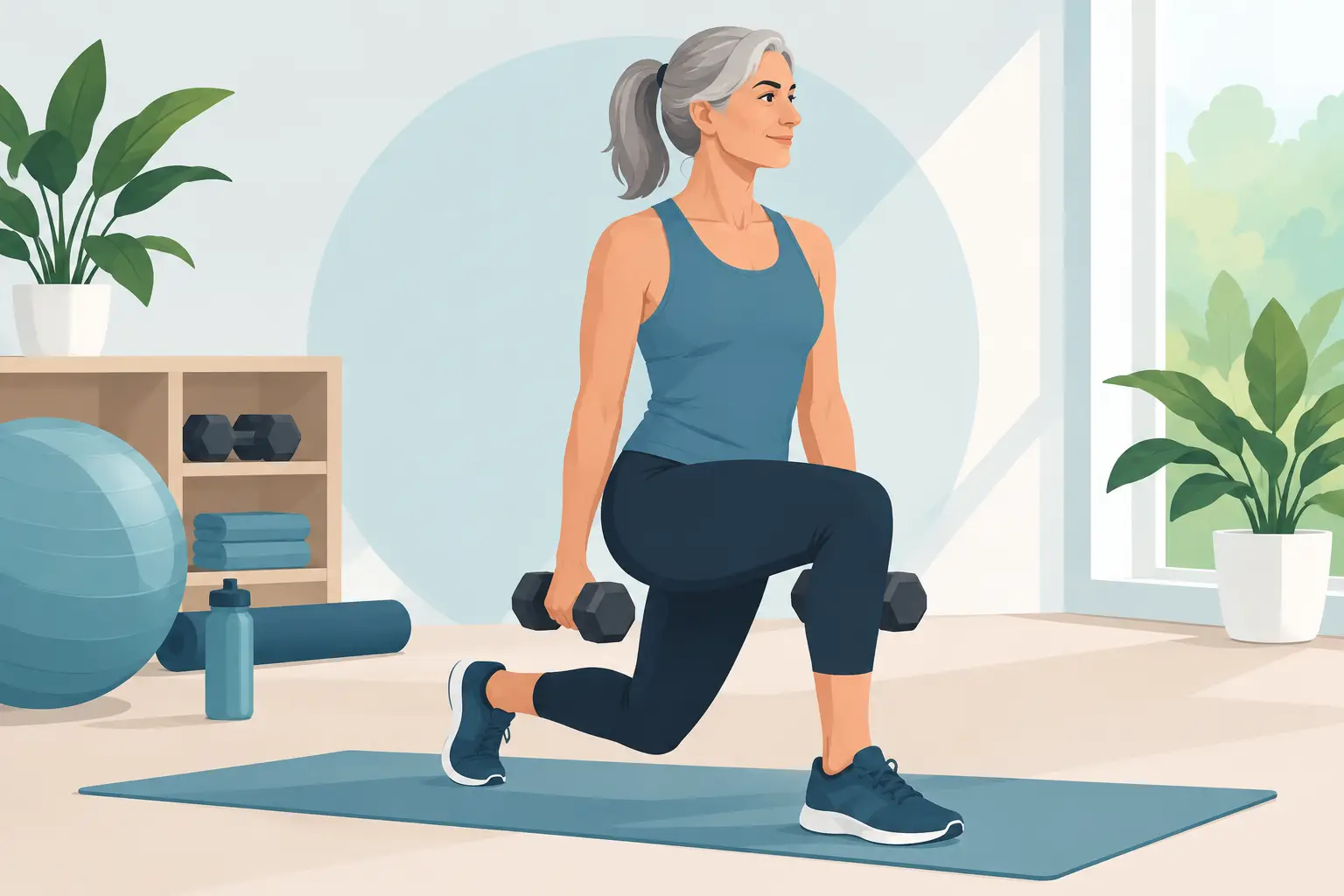
Strength training helps you climb stairs, carry groceries, get up from the floor and stay active. Squatting, hinging, pushing, pulling and carrying are all useful patterns when scaled to your ability. The best program is not the one with the heaviest weights; it is the one you can do with sound technique, enough resistance and steady progression.
2. Protect joints without avoiding challenge
Joint aches are common in menopause and are often dismissed as inevitable. They should not be ignored. Pain usually means the exercise, range, load, speed or volume needs adjusting, not that you must stop moving. Low-impact resistance training, such as adjustable-incline bodyweight work, lets you train hard while keeping movement quality at the centre. Training too cautiously for too long leaves strength on the table; training through sharp, lingering pain makes things worse. A good coach finds the middle ground.
3. Look after your bones
Walking, stair climbing, strength training and carefully introduced impact can all support bone health. High-impact jumping is not mandatory and not suitable for everyone, especially with pelvic floor symptoms, balance concerns, joint pain or low bone density. If you have osteoporosis, a past fracture or significant back pain, talk with your physician before starting a new plan, and read our guide to safe exercises for osteoporosis.
4. Treat recovery as part of the program
Disrupted sleep, night sweats and work stress all affect how you respond to exercise. Instead of judging each session by exhaustion, look at patterns over several weeks: Are you getting stronger? Is soreness manageable? Do joint symptoms settle within a day? On low-energy days, lighter resistance or a mobility session beats skipping movement entirely.
A sustainable week
For most women, a practical week includes two or three strength sessions, regular walking or other comfortable cardio, and a little mobility work built into the day. Strength sessions should cover the major movement patterns and leave you worked, not depleted. Stop sets before technique breaks down.
Someone returning after years away may do best with two coached sessions and short walks. Someone with a training base may handle more demanding resistance work and structured conditioning. Symptoms, sleep, injury history and confidence all shape the right balance.
Common mistakes
- Punishing workouts. More intensity is not automatically better. If it leaves you exhausted or in pain, it is not serving you.
- Waiting until you feel fitter. Feeling stiff or out of shape is a reason to start with guidance, not to wait.
- Changing everything at once. A new diet, daily hard workouts and a strict schedule all at once create more stress than progress.
- Using the scale as the only measure. Strength, balance, posture, energy and fewer aches are real results.
When coaching makes the difference
Personal coaching is especially valuable when menopause overlaps with old injuries, chronic pain, osteoporosis concerns, pelvic floor symptoms or a long break from exercise. A coach adjusts movements in real time and progresses resistance carefully.
At TSquared, Troy Tyrell has coached women through perimenopause and menopause for over 20 years. Train one-on-one in our personal training for women, or join our strength classes for women 40+ with a maximum of 4 people. Your first session is free.