
A tight hip before a morning walk, a stiff shoulder reaching for the top shelf, or a back that complains after a day at a desk all lead to the same question: should you stretch more? Often the better question is whether you need stretching, mobility training, or both.
The two produce different results. Stretching can help you feel less restricted in the moment. Mobility training builds the control and strength to use a joint's range with confidence. For adults managing old injuries, sensitive joints or recurring stiffness, that difference decides whether exercise feels restorative or aggravating.
What the experts agree on
In 2025, a panel of 20 international stretching researchers published a Delphi consensus statement in the Journal of Sport and Health Science. They agreed that stretching, short term and long term, improves range of motion, though alternatives exist, and reduces muscle stiffness, which is not always desirable. They also agreed that stretch training does not meaningfully build muscle, is not an all-round injury-prevention strategy, does not improve posture, and does not speed recovery right after exercise.
So stretching is a useful tool with specific jobs, not a complete movement plan.
The core difference
Stretching mainly improves flexibility: the passive range available at a muscle or joint. Think of reaching toward your toes with one leg extended, or holding a doorway chest stretch. You move into a position and hold it while your body gradually tolerates that range.
Mobility is broader. It is the ability to actively move a joint through a useful range with control. Good shoulder mobility is not just pulling your arm overhead with the other hand; it is reaching overhead on your own, keeping the shoulder comfortable, and controlling the arm on the way down. Flexibility is what your body can reach passively. Mobility is what you can reach and control yourself.
When stretching is useful
Stretching helps when a muscle feels temporarily tight after sitting, travel or exercise. A gentle calf stretch can make walking more comfortable; light chest stretching can feel good after hours at a computer; slow hip stretches can help you settle before bed.
Dynamic stretching, controlled movement rather than long holds (leg swings, arm circles, a slow lunge with a reach), can prepare your body for a workout. Match the stretch to the goal: to relax after a long day, a few comfortable static stretches may be exactly right. To change how your knees track on stairs or how your shoulders handle pressing, stretching alone is unlikely to solve it.
More is not always better. Forcing a stiff joint into range can irritate tissues, especially with pain, recent injury, arthritis or instability. A stretch should feel like mild tension, never sharp pain, numbness or pinching.
Why mobility training lasts longer
Many people who feel "tight" are not short of muscle length. The real limit may be joint control, low strength near the end of a range, coordination, or a nervous system that does not feel safe allowing more movement. That is why a stretch can feel good briefly without changing how you move for the rest of the day.
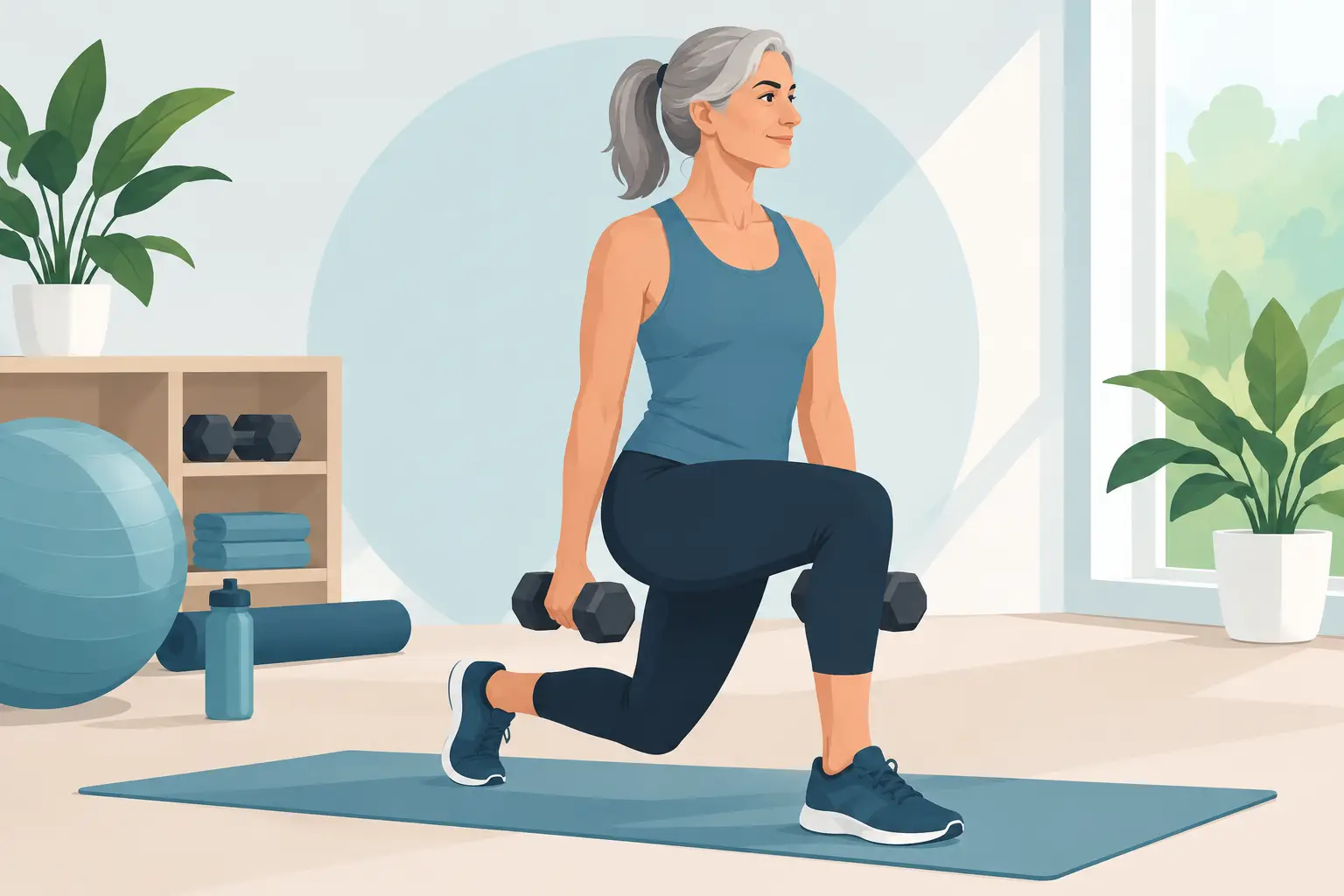
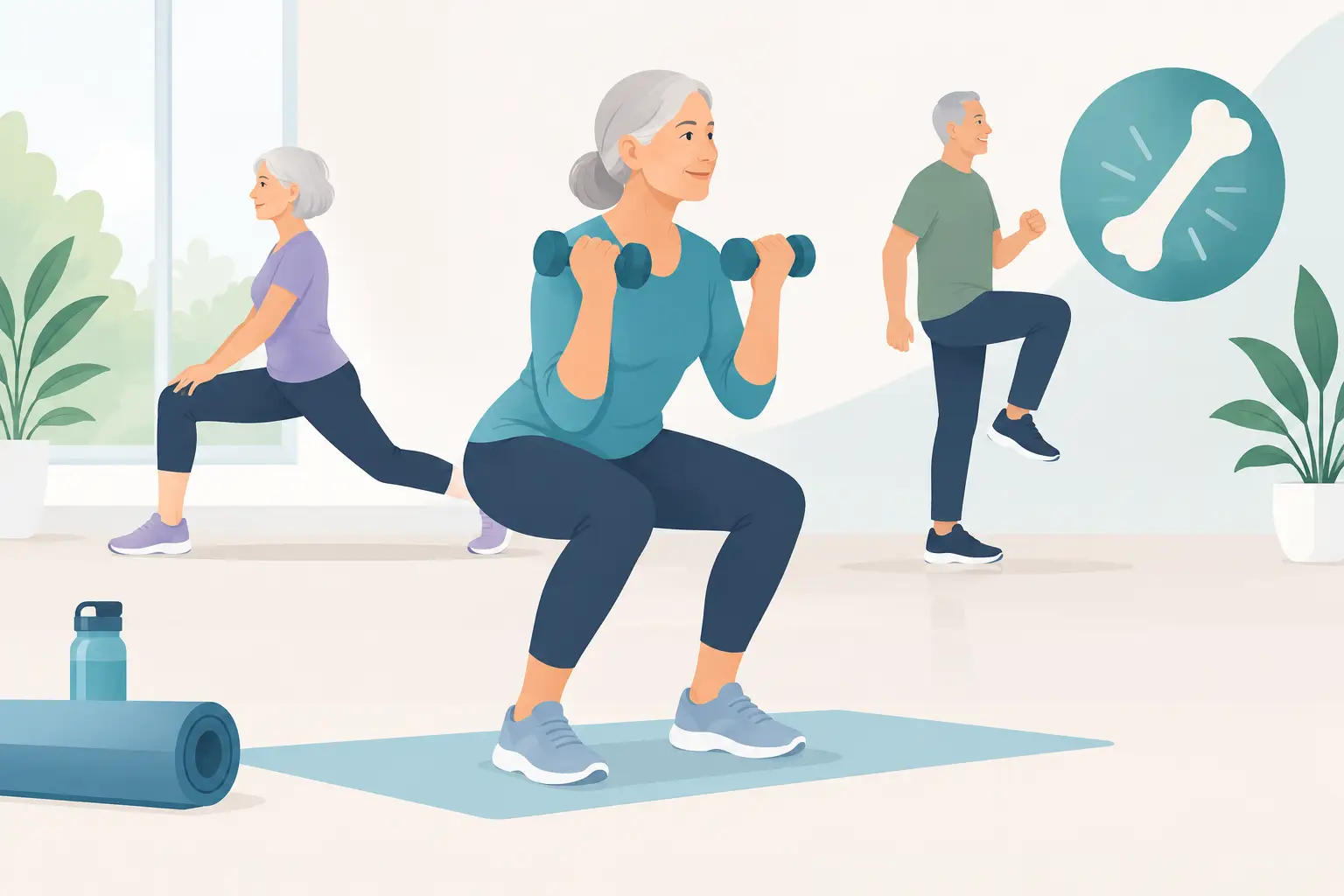
Mobility training practises controlled movement in usable ranges. A supported squat improves ankle, knee, hip and trunk coordination at once. A controlled row builds shoulder strength while teaching the shoulder blade to move well. A split-stance exercise improves hip mobility while training balance and leg strength.
Strength is part of mobility
A joint needs strength to use its range safely. Someone may pull a knee to their chest lying down yet wobble stepping onto a high curb; their hip range is fine, but they need single-leg strength and control. Someone may stretch both arms overhead yet struggle to lift a suitcase into an overhead bin; upper-back strength and gradual overhead loading will help more than another shoulder stretch.
That is why good mobility work often looks like strength training at a lighter load with close attention to position: slow tempos, supported patterns, controlled rotations and isometric holds. The most useful programs combine both.
How to choose for your body
- Stiff after sitting but fine once moving? Short bouts of gentle stretching and regular walking may be enough.
- Repeatedly blocked during squats, reaching, stairs or getting off the floor? Mobility-focused strength work is the better long-term investment.
- Tightness returns right after stretching? The area may be compensating for weakness elsewhere. Tight hip flexors, for example, often improve more with glute strength and hip-extension practice.
- Persistent or worsening pain, swelling, tingling or weakness? See a qualified health professional first, then rebuild with a trainer within their recommendations.
A practical weekly balance
Mobility does not need a separate hour every day. A few minutes of joint-specific movement before exercise, controlled strength work two or three times a week, and brief stretching where it feels helpful is enough for most adults. Before a lower-body workout, use hip, ankle and squat-pattern drills. At the end of the day, choose gentle static stretches for areas that feel restricted, and breathe normally.
The goal is not to become impressively bendy. It is to move through your day with less hesitation: turning your head while driving, carrying groceries, getting down to the floor, and training without wondering what will hurt.
At TSquared, our mobility and flexibility training uses the low-impact Gravity Training System to build strength through a comfortable range. Desk workers can also try our posture and desk worker program. Your first session is free.